

Climate change is expected to bring more frequent and intense rainfall, increasing the risk of flash floods. Singapore is dealing with stormwater management in a creative way.
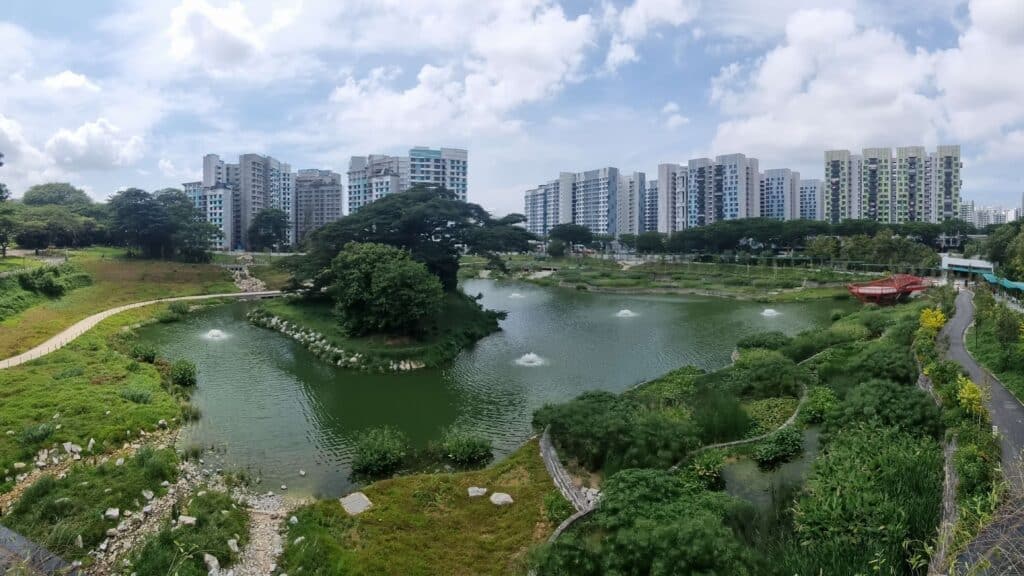
The Alkaff Lake at the new Bidadari Park is a first-of-its-kind multi-functional drainage infrastructure for stormwater management.
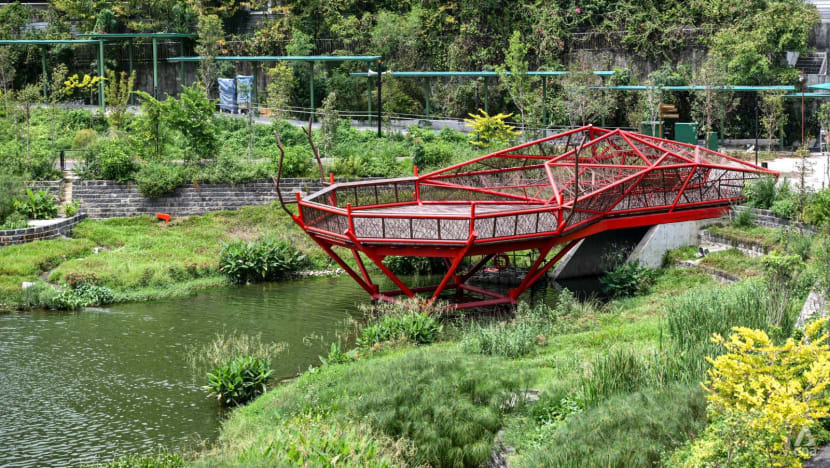
Integrated within Bidadari Park, Alkaff Lake looks like a regular lake in dry weather and forms part of the recreational and aesthetic community space for the public.
During a heavy storm, the lake temporarily holds stormwater runoff and regulates the flow to the downstream drainage system.
The water level in Alkaff Lake is typically maintained at between 1 and 1.5 metres.
When there is heavy rain, the water level could rise up to 4 metres.
The lake can hold up to 40,000 cubic metres of water. This is equivalent to 16 olympic size swmimming pools.
The public need not be alarmed when the water level rises and the footpath is temporarily flooded in a storm. The lake is functioning as intended to capture and hold stormwater.
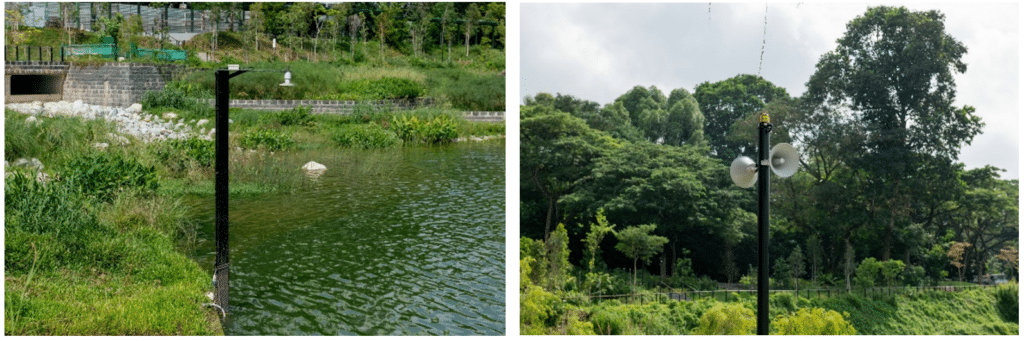
To ensure public safety, PUB has implemented a robust warning system
Around the lake, there are automatic sensors that monitor the water level. As the water level rises, beacon lights and audio broadcasts in four languages will be activated to inform the public to move away from the lake.
There are also red safety markers and signages to educate visitors on the areas they should avoid.
To ensure good water quality in the lake, Alkaff Lake incorporates features such as terraced wetlands and swales which help to cleanse and filter pollutants from stormwater runoff.
A swale is a natural conveyance system that conveys stormwater at a slower speed to allow the settlement of sediments before it enters a waterbody.
Gross Pollutant Traps (GPT) are installed to trap litter and silt that are accumulated in the runoff, while aerators within the lake improve water circulation and increase the amount of dissolved oxygen in the water.