A 42-year-old man sustained a gunshot wound while cycling with friends in a restricted forested area near Upper Seletar Reservoir on the morning of June 15.
According to the police, they were alerted to the incident at about 11:55pm by the National University Hospital (NUH), where the injured man had sought treatment. A bullet was found lodged in his lower back and later removed through surgery. He is currently in stable condition, and his injuries are not considered life-threatening.
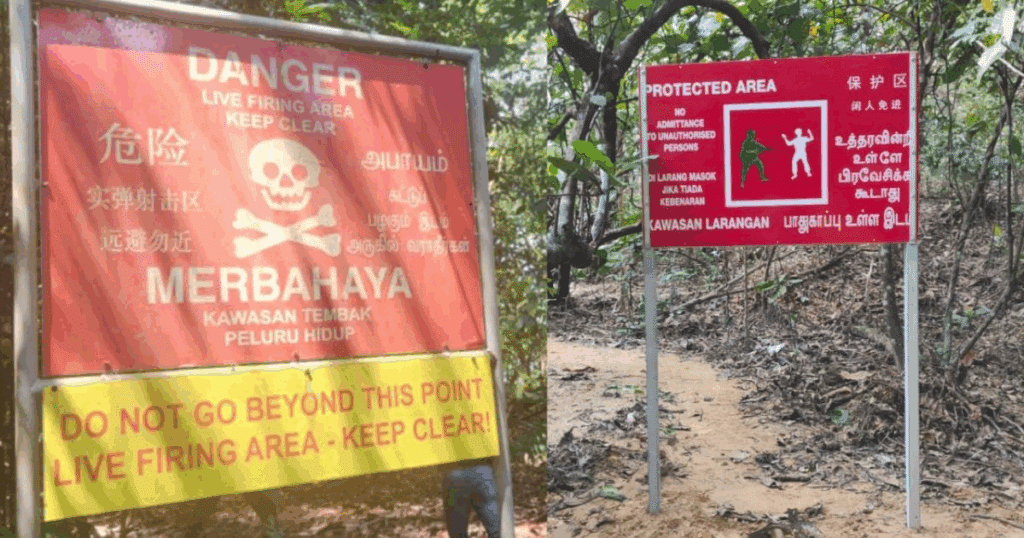
Investigations revealed that the man had been cycling around 11:40am in an area between Upper Seletar Reservoir and Upper Peirce Reservoir—an area off-limits to the public due to ongoing military exercises. Warning signs prohibiting entry into the live-firing zone were posted in the vicinity.
Preliminary findings indicate that the Singapore Armed Forces (SAF) were conducting live-firing exercises at Nee Soon Range, approximately 2.3 kilometres away, at the time of the incident.
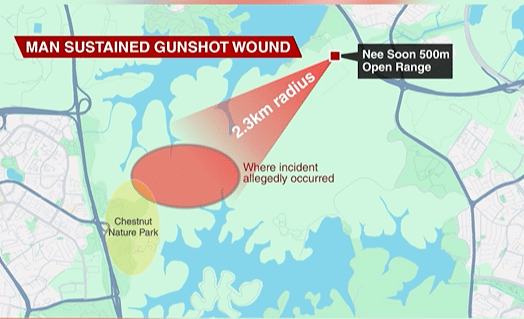
In a statement, the Ministry of Defence (MINDEF) said the SAF is cooperating fully with the police and relevant authorities in investigating the matter. As a precaution, live-firing activities at the Nee Soon 500m Range have been temporarily suspended.
Mindef said in the June 16 statement that under the Military Manoeuvres Act (MMA), “unauthorised persons are not allowed to enter gazetted areas designated for SAF (Singapore Armed Forces) live firing in consideration of their own safety”.
Police investigations are ongoing. At this point, foul play is not suspected.
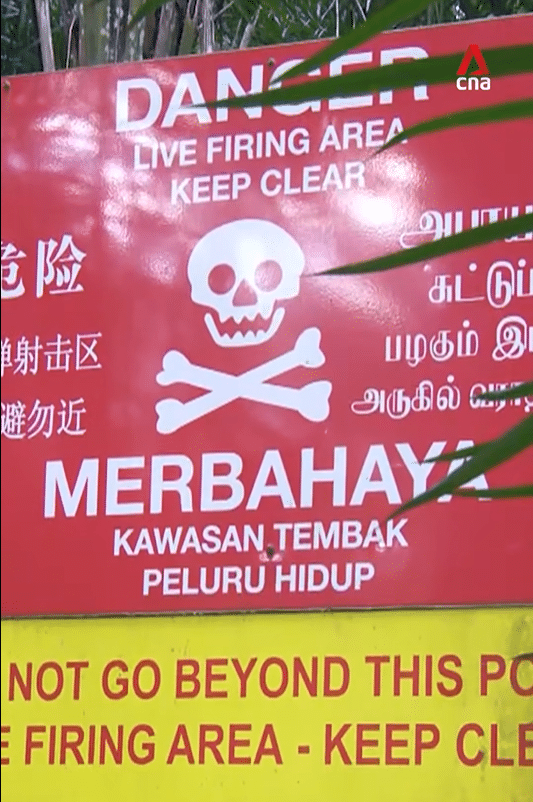
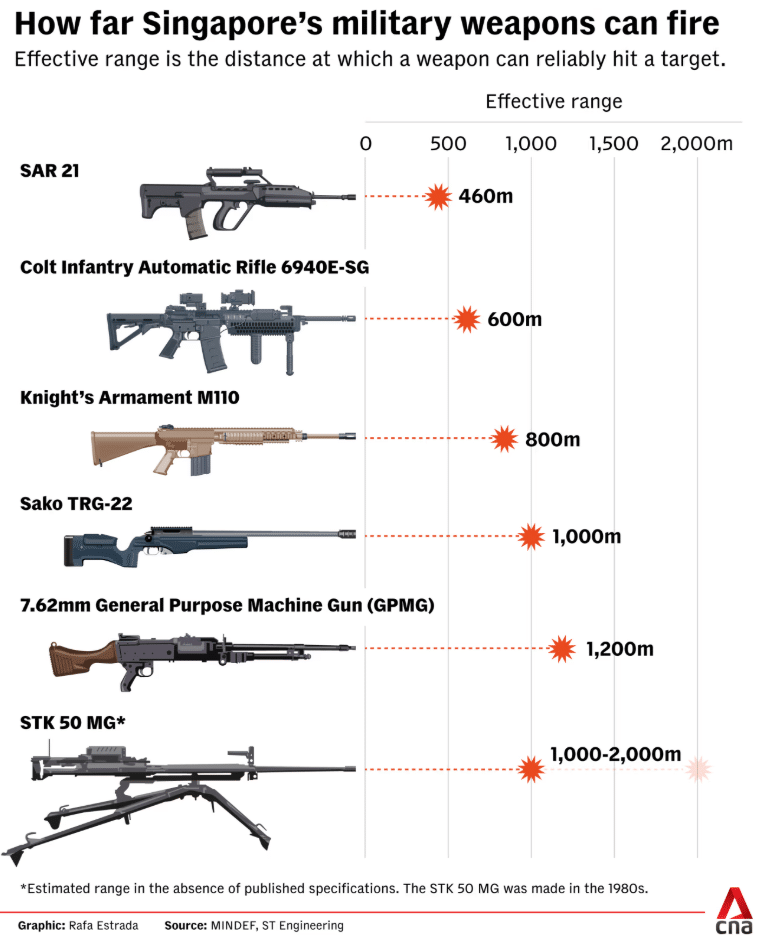
How far can Singapore’s military weapons travel?
The effective range of military firearms used during live-firing exercises varies: the SAR 21 rifle has an effective range of 460 metres, the GPMG (General Purpose Machine Gun) can reach up to 800 metres, and sniper rifles may be effective beyond 1,000 metres. However, actual bullet travel distance—especially in uncontrolled conditions—can extend further, with some rounds potentially travelling over 2 kilometres if unobstructed.