
There is a permanent substratum to our existence as a nation-state that will persist no matter what else changes, and it would be foolish of us to ignore it, Mr Janadas Devan asked in a speech delivered in 2017 at the Institute of Policy Studies (IPS).
“Things and actions are what they are, and their consequences will be what they will be: Why then should we seek to be deceived?”
We cannot deceive ourselves about our geography, our location
Singapore is a small island in the middle of Southeast Asia, one of the most religiously diverse regions in the world, Mr Devan said.
The religious diversity of Southeast Asia is accompanied by staggering cultural, ethnic, political and historical diversities.
This diversity in Southeast Asia – both religious and cultural – is replicated in our own diversity.
That is to say, our diversity mirrors the diversity in Southeast Asia.
This will persist no matter what else changes.
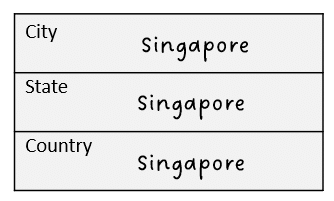
Singapore is both a country and a city
Something else that will always persist is the fact that Singapore is a country as well as a city, a fact that we don’t always keep foremost in our minds, said Mr Devan.
Singapore is a city that has no country outside the city – as in “country-side”.
There is no country beyond this city; this city is all the country that we have.
Actually, the fact that this city is all the country that we will have informs every facet of our existence.
The fact that this city is all the country that we will have, informs every facet of our existence.
Janadas Devan Tweet
Singapore: a most unlikely country
One, Singapore is the only city in the world that has a military and a foreign service too. London doesn’t have a Navy; we do. Tokyo doesn’t have an Air Force.
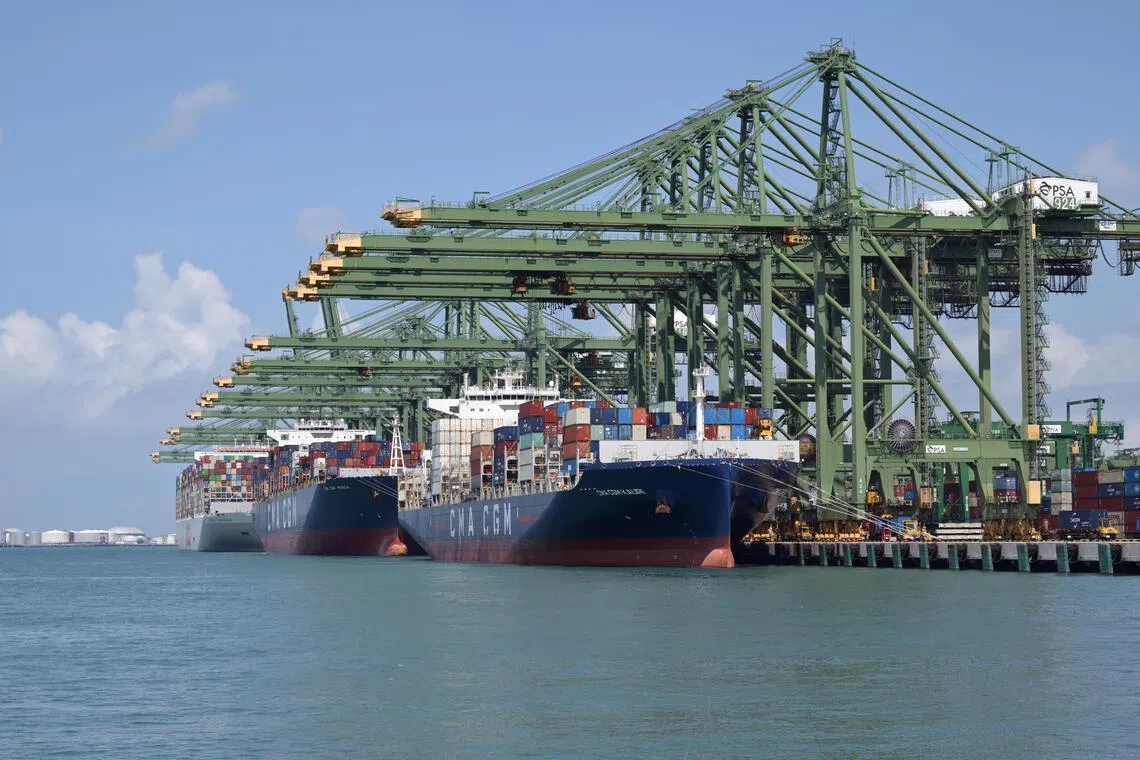
Two, all of Singapore’s gateways — its port, its airport — have to be located within the city. You can’t put Changi Airport, for instance, somewhere out in the boondocks, a couple or so hours outside the city — like Narita or Dulles or Suvarnabhumi or Heathrow or KLIA — for the simple reason Singapore doesn’t have a boondock.
Three, unlike other global cities, Singapore has a sizeable manufacturing base — almost 20 per cent of our GDP.
There are a number of reasons why this should be so but one is because we are a city as well as a country, said Mr Devan.
If we were to have a purely service economy — like London or New York or other global cities, with high-paying jobs in finance and banking at one end and low-paying jobs flipping hamburgers and providing in-situ services at the other — our income inequalities would be far worse.
Our Gini coefficient is high compared to other countries. But when compared to other global cities, we are considerably better off — in large part because we have a substantial manufacturing base providing a range of jobs in the middle.
Thse activities mentioned in One, Two and Three already occupy almost half of this red dot.
That Singapore should exist — as a city and a country — is a miracle.
What does it take to sustain this miracle?
As both a city and a country where the three functions (one, two and three), already occupy so much space, this place has to be an exceptionally and intricately well-organised organism — or it doesn’t exist at all.
Singapore cannot be exceptional without having an exceptional government — an exceptional government that can plan decades ahead, take long-term decisions, and sustain purposeful action over long stretches of time.
You can’t get a Marina Bay without such planning. You can’t convert almost the entire island into a water catchment area without the capacity for sustained long term action. You can’t keep this miraculous organism — a country in a city — alive without such a government.
We saw some years ago what happens when the government’s capacity to plan ahead falters: the trains become crowded, the waiting times for new flats stretched for years, there were not enough hospital beds.
Actually, when compared to failures of governance elsewhere, these were stumbles. But the ruling party paid a price nevertheless in the 2011 General Election, and many (including not a few baffled foreigners) said Singaporeans were an exceptionally spoilt people.
Singapore cannot have exceptional government unless Singaporeans too are exceptional.
Singaporeans were correct to expect their government to always be exceptional.
Forget about high ministerial salaries and transactional politics: Singapore cannot exist without exceptional government, Mr Devan said.
You cannot have laissez-faire government in Singapore, let alone second-rate government. Laissez-faire would have meant staying in Malaysia.
Singaporeans should always expect the best of their government — which ultimately means they must expect the best of themselves.
Singapore cannot have exceptional government unless Singaporeans too are exceptional.
This might sound an awfully cloying cliché but it happens to be true.
If ever we become so idiotic as to elect buffoons into office; if ever our politics became so toxic as to allow nativist, neo-fascist, populists into power; we are unlikely to have a second chance, a redo; we would be finished.
This has nothing to do with one-party dominant or two-party systems.
It is a given, I believe, our politics will become more contested – for the simple reason our society is diverse, the challenges and issues we face are complex, and an increasingly better educated population open to the world are bound to have different views on public policy. All that is well and good.
The challenge is maintaining exceptional government — capable of that sustained, long-term planning and action without which this city cannot be a country — even as our people become more diverse and our politics more contested.
Can that be done?
Not easy.
Things and actions are what they are, and their consequences will be what they will be: Why then should we seek to be deceived?