
Singapore ranks among the world’s healthiest, happiest, and longest-lived places on the planet according to The Blue Zones Secrets for Living Longer: Lessons From the Healthiest Places on Earth .
Blue Zones are places in the world with the healthiest, longest-living populations. There are five Blue Zones in the world and they are: Okinawa Prefecture, Japan; Nuoro Province, Sardinia, Italy; the Nicoya Peninsula, Costa Rica; and Icaria, Greece.
Culture has prescribed and blessed these people with healthy lifestyles and healthy lives.
Singapore is the 6th Blue Zone added. But unlike the other five, Singapore is not a cultural Blue Zone. Singapore is no isolated region where a traditional culture evolved a lifestyle of longevity over a period of centuries.
As the Blue Zones founder, Dan Buettner noted, Singapore was a busy crossroads of commerce and cultures whose leaders from the start set out to create an environment of health and well-being.
It is an engineered longevity hotspot through intentional government policy and investment.
In 1960, the average newborn in Singapore could expect to live only 65 years. Now, one lifetime later, life expectancy has grown by almost 20 years.
Singaporeans also rank number one in healthy life expectancy and have the world’s lowest rate of cardiovascular mortality and best health-care system.
The number of centenarians more than doubled during the past decade.
Singapore is a Blue Zone through intentional government policies.
The high taxation on cigarettes coupled with smoking prohibition in many public spaces, for example, have resulted in cleaner air and improved health.
The use of education and the Nutri-Grade labelling for sugar have had a tremendous impact in changing habits and steering people away from too much sugar consumption is another instance of a concerted effort at changing dietary habits.
Singapore’s healthcare system is widely regarded as one of the most forward-thinking of all time, with an emphasis on complete health and wellbeing for its citizens. Despite being such a small country, Singapore boasts 12 state hospitals and 10 private hospitals.
Another factor contributing to Singapore’s position as the best country in the world for healthcare is its emphasis on preventive healthcare. Singapore’s Health Promotion Board (HPB) emphasises the role of immunisation across the community, health screening (Screen For Life) to catch diseases early, and an anti-diabetes drive.
There is an extensive network of Active Ageing Centres for seniors to stay active and engaged in the community which benefits them physically, socially, mentally and emotionally.
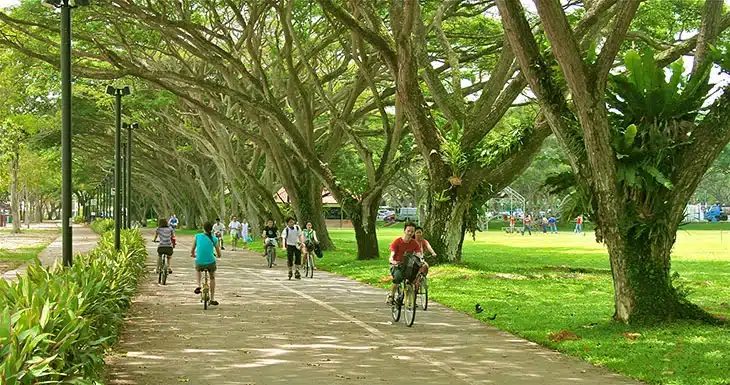
Singapore is an urban city with lots of green spaces, parks and gardens which makes for conducive living.
Charu Kokate, senior partner at Safdie Architects, who also was the project lead behind the firm’s iconic buildings like Sky Habitat Residential Towers and Jewel Changi Airport said, “Government initiatives that prioritise the seamless integration of parks, gardens and nature reserves into the cityscape have earned [Singapore] the reputation of being a ‘garden city’.”
“After living in Singapore for more than 15 years, I am constantly impressed by how the Urban Redevelopment Authority has meticulously planned the city. Their focus on sustainability, efficient land use and incorporating green spaces into urban life is remarkable,” he said.