
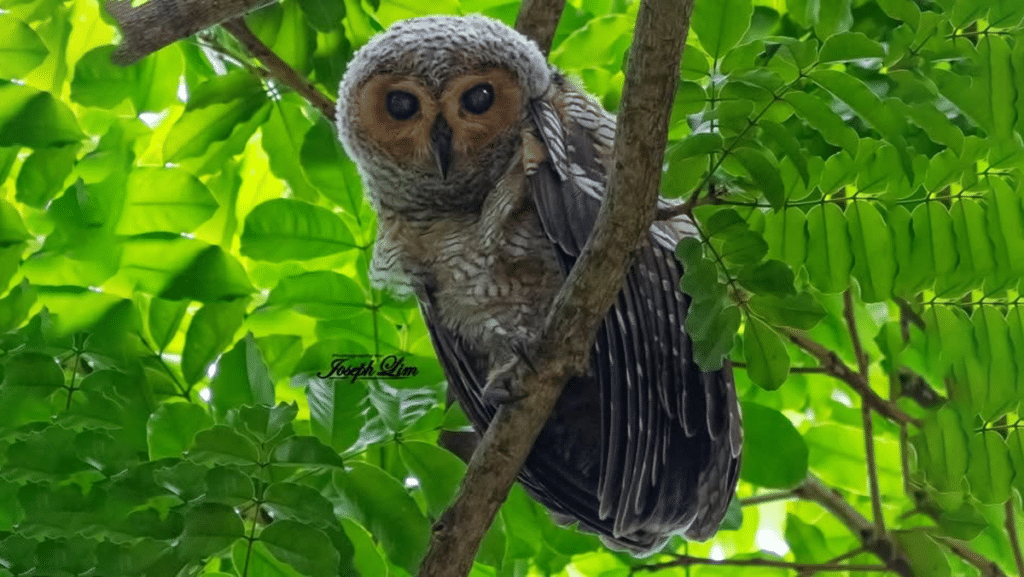

Pasir Ris Park, a tranquil green oasis on Singapore’s northeastern coast, is home to an enchanting array of wildlife, but none are as iconic or captivating as the Spotted Wood Owls (Strix seloputo). These majestic birds, known for their striking plumage and serene demeanor, have become one of the park’s key attractions, drawing birdwatchers and nature enthusiasts alike.
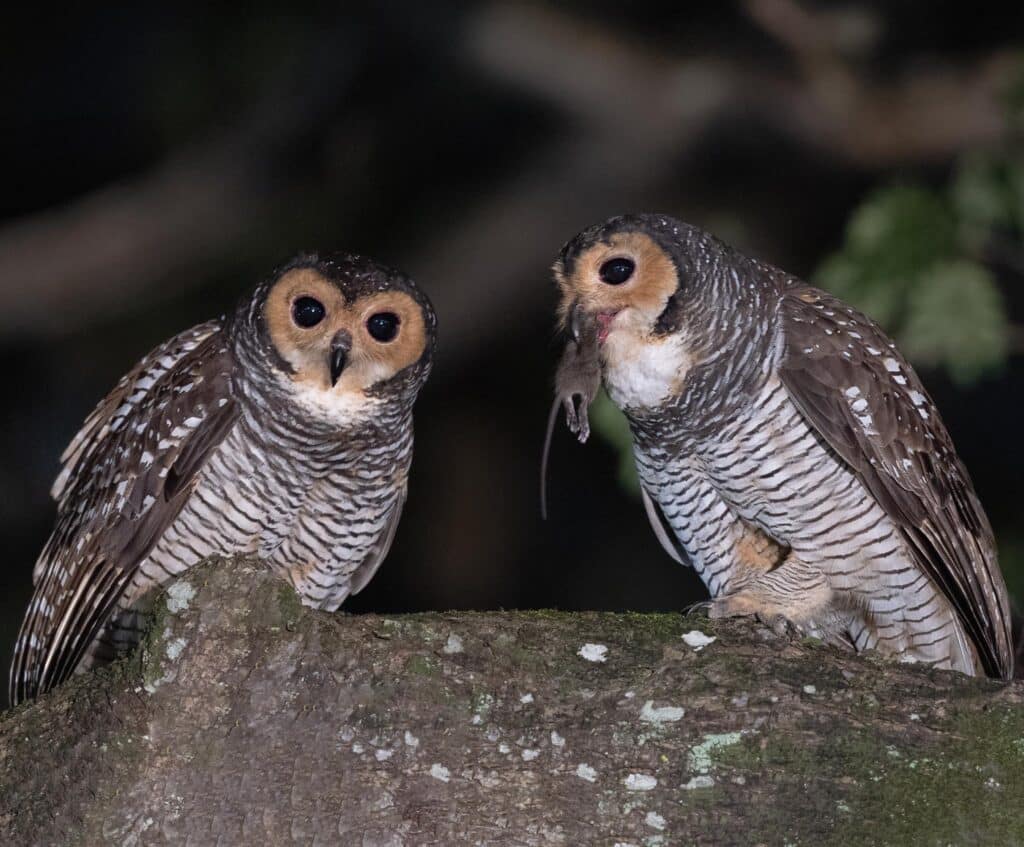
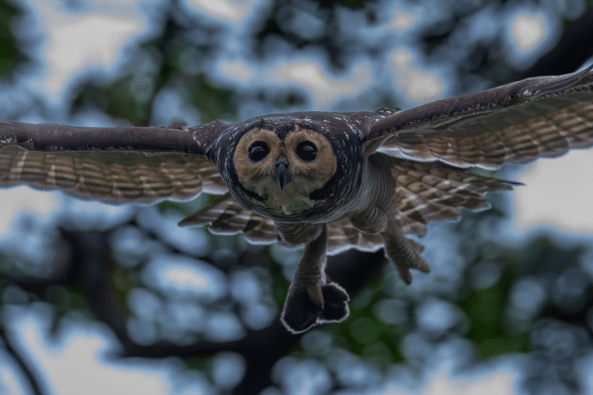
Spotted Wood Owls are among the largest owl species in Singapore. Their defining features include a reddish-brown facial disc, a creamy white throat, and a mottled brown-and-white body that provides excellent camouflage against the forest canopy. Large, soulful eyes lend them an almost mystical air, while their broad wings and silent flight make them master hunters in the dark. Despite their nocturnal nature, Pasir Ris Park visitors frequently spot these owls during the day, resting high in the trees.
Pasir Ris Park is part of Singapore’s broader strategy to integrate urban development with nature. The Ministry of National Development (MND) plays a key role in ensuring that wildlife like the Spotted Wood Owls can thrive even as Singapore continues to expand its housing and recreational facilities. Agencies under MND, such as the Housing and Development Board (HDB) and National Parks Board (NParks), work carefully to maintain this delicate balance. While HDB addresses the nation’s housing needs, NParks ensures that green spaces like Pasir Ris Park are preserved and enhanced to serve as habitats for wildlife and recreational spaces for the public.
The park’s mix of mature trees, dense foliage, and proximity to water bodies creates an ideal environment for the Spotted Wood Owls. These owls primarily feed on small mammals, birds, and occasionally reptiles, making their presence a strong indicator of the park’s healthy ecosystem. Visitors often encounter family units of these owls, especially during nesting season, when the adults are particularly protective of their young.
The Spotted Wood Owls of Pasir Ris Park are a testament to Singapore’s commitment to sustainable urban development. Through the efforts of MND and its agencies, the country continues to balance the demands of modern living with the need to protect its natural heritage. For visitors, the presence of these owls offers a unique and magical connection to nature.