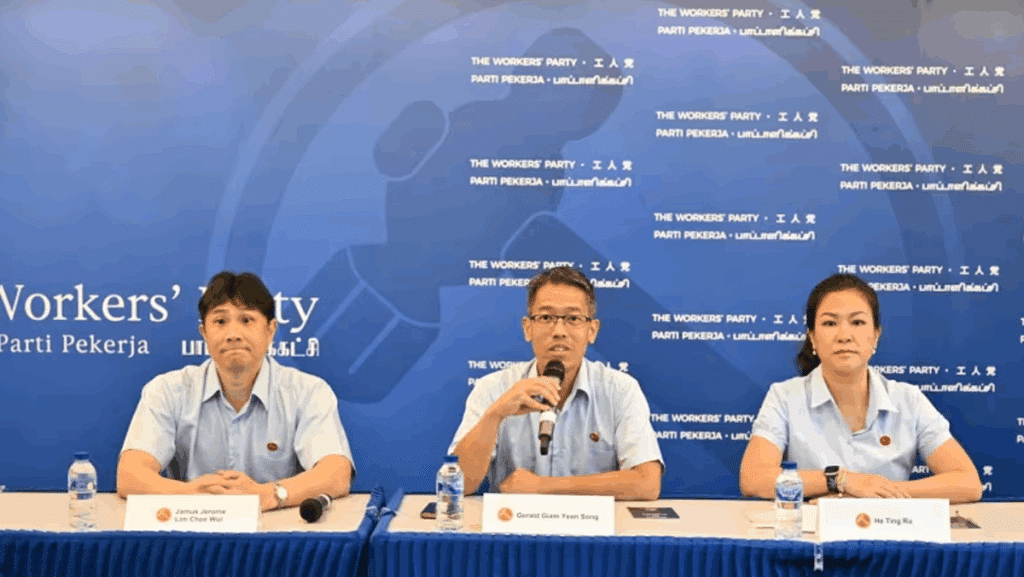
The Workers’ Party’s (WP) proposal to introduce a wealth tax. Here’s what I think.
On the surface, the idea seems simple and appealing: tax the ultra-rich to support broader social equity. But dig a little deeper, and the reality is far more complex — especially for a small, open economy like Singapore’s.
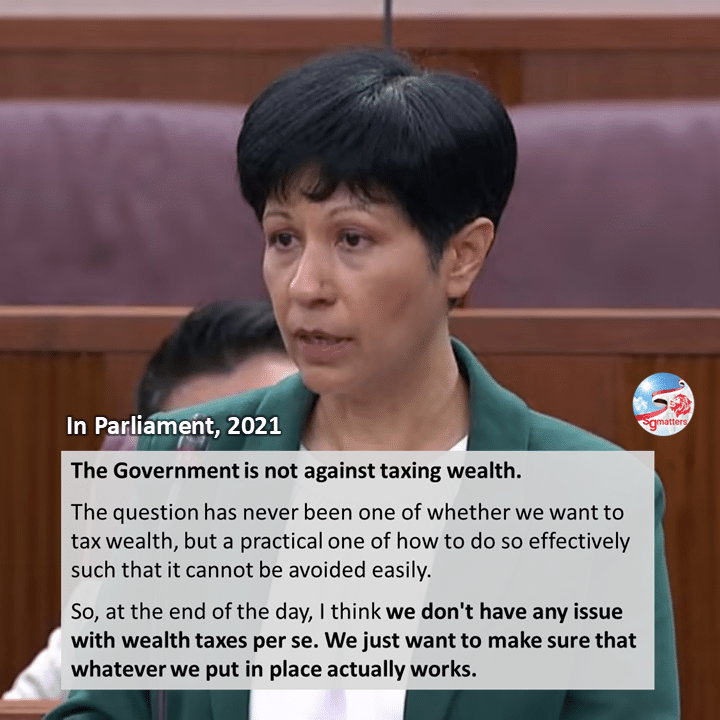
To be clear: Singapore is not fundamentally opposed to the idea of taxing wealth as Minister Indranee Rajah had stressed in Parliament in 2021.
In fact, we already do so in various ways — through property taxes, stamp duties on high-value assets, and tiered income tax rates.
The question is not whether the wealthy should contribute more, but how we ensure any new system is effective, enforceable, and does not backfire on the very people it aims to help.
Lessons From Abroad
Wealth taxes are not new. In 1990, 12 of the 36 OECD countries imposed some form of personal wealth tax. Today, only five still do. The others scrapped them due to a common set of problems: high administrative costs, difficulties in valuation, capital flight, and minimal revenue gains.
France is a cautionary tale. Its wealth tax generated around US$2.6 billion annually but led to an estimated US$125 billion in capital flight since 1998. Wealthy individuals and businesses simply moved their money — and in many cases, their residency — elsewhere. The result? A net loss for the economy.
Even Switzerland, one of the few countries still maintaining a wealth tax, derives only around 2% of its GDP from it — a relatively modest sum considering the effort involved. And Switzerland’s situation is unique, built on a longstanding tradition of wealth management and a very different tax culture.
The Practical Challenges
Wealth is not the same as income. It’s often locked up in non-liquid assets like businesses, intellectual property, and real estate. Valuing these assets fairly and accurately — especially for private companies or art collections — is complex and resource-intensive.
There’s also the issue of mobility. The global elite are not bound by borders. With the click of a button, they can relocate assets, redomicile companies, or shift intellectual property rights to more favorable jurisdictions. And they do — legally and with the support of world-class advisors.
In Singapore’s context, this matters. We are a global hub for capital, talent, and enterprise. Our success depends heavily on remaining attractive to international businesses and high-value individuals who contribute to job creation, innovation, and economic growth. A poorly designed wealth tax could erode this competitiveness, pushing away exactly the kind of investment we need to thrive.
A Balanced Approach
None of this is to say that we should ignore inequality or avoid making our tax system more progressive. Quite the opposite.
Singapore has been steadily adjusting its fiscal tools — from higher property taxes on luxury homes, to the Additional Buyer’s Stamp Duty (ABSD), to enhancements in social transfers for lower-income groups.
What we must avoid is implementing a policy that is politically appealing but economically unsound. A blanket wealth tax — poorly designed and inadequately enforced — risks becoming a symbolic gesture that does more harm than good.
Instead, we should continue to refine existing measures, close loopholes, and explore more targeted ways to tax passive wealth and large capital gains, where feasible. This includes leveraging international cooperation on tax transparency and digital asset regulation, rather than going it alone.
In Conclusion
A fairer, more inclusive Singapore is a goal we all share. But good intentions are not enough. Sound policy demands not just asking who pays, but understanding how they will respond.
In a world where capital is mobile and reputations are hard-earned, we must tread carefully — and smartly — in our pursuit of fairness.