
Why punishment falls short
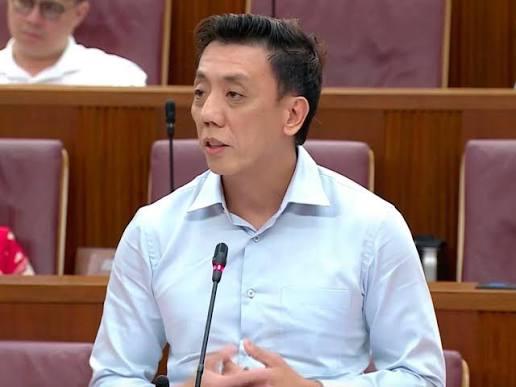
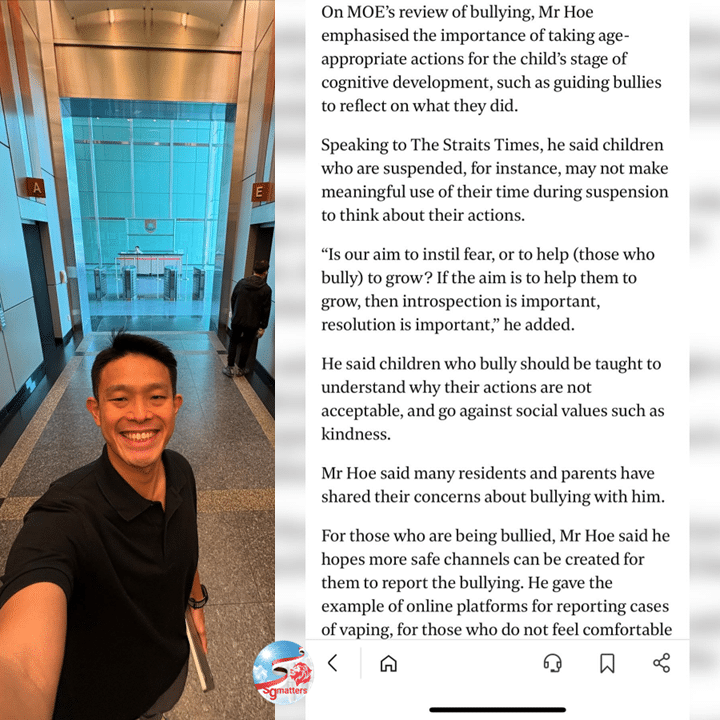
I agree with MP David Hoe on the importance of taking age-appropriate actions that match a child’s stage of development.
Suspension may feel like justice, but if a child spends the time resentful rather than reflective, then nothing has been gained.
As Mr Hoe said, what truly matters is introspection and resolution – helping the bully understand why their actions are unacceptable, and why kindness matters.
Restorative justice in practice
This is why MOE stresses restorative justice: encouraging perpetrators to take responsibility, repairing relationships, and avoiding entrenched labels of “bully” and “victim”.
Parents, too, are expected to play an active role.
Why helping the bully matters
We must bear in mind that we are dealing with young children who are still growing and developing.
So the question we must ask ourselves is: what is our end goal for bullies?
MOE’s approach recognises that helping the bully matters as much as supporting the bullied.
Bullying is often a symptom of deeper issues – unmet emotional needs, trauma, insecurity, or the absence of healthy role models.
Simply punishing a child without addressing these root causes risks driving the behaviour underground or breeding resentment.
Discipline can set boundaries, but without guidance and support, it rarely teaches better alternatives.
Crucially, providing a support system for bullies does not in any way diminish the trauma and pain suffered by victims.
Rather, it ensures that both harmed and harming children receive the help they need so the cycle of harm can be broken.
The teacher’s dilemma
Teachers face an almost impossible balancing act: protecting victims, rehabilitating bullies, calming parents, maintaining fairness, and safeguarding the wider student community.
They must also distinguish between thoughtless behaviour and intentional harm. This is by no means easy task in the bustle of school life.
The social media challenge
The challenge becomes even greater once allegations spread online.
In the Sengkang Green case, MOE’s detailed findings on Aug 20 competed with an earlier viral post that had already framed the school as negligent.
When outcomes do not align with parents’ expectations, cases risk being described as “swept under the carpet”, regardless of the facts.
Schools and MOE thus find themselves judged in the court of public opinion as much as on the merits of their actions.
A lesson for adults
The truth is that bullying cases are messy.
Schools and MOE must protect students, reassure parents, and maintain trust, all while investigations unfold under the glare of public scrutiny.
Jason Tan, associate professor, policy, curriculum and leadership, at the National Institute of Education wrote in a commentary for the Straits Times which unfortunately was behind a paywall:
“Why should we expect perfectly harmonious relations among children and adolescents in school, when adults themselves struggle with conflict and office politics in the workplace? Similarly, stemming bullying in schools is always a work in progress where best effort should not be so easily dismissed.”
Schools, parents and society must keep refining our approaches to dealing with bully, whether through preventive education, restorative justice or parental involvement.
“At the end of the day, children are watching how adults respond.
If children see knee-jerk blame and retribution, they learn one kind of lesson. If they see fairness, care and accountability – extended not just to victims but also to those who lash out – they learn another. That is the important long-term test of how we deal with bullying,” Jason wrote.