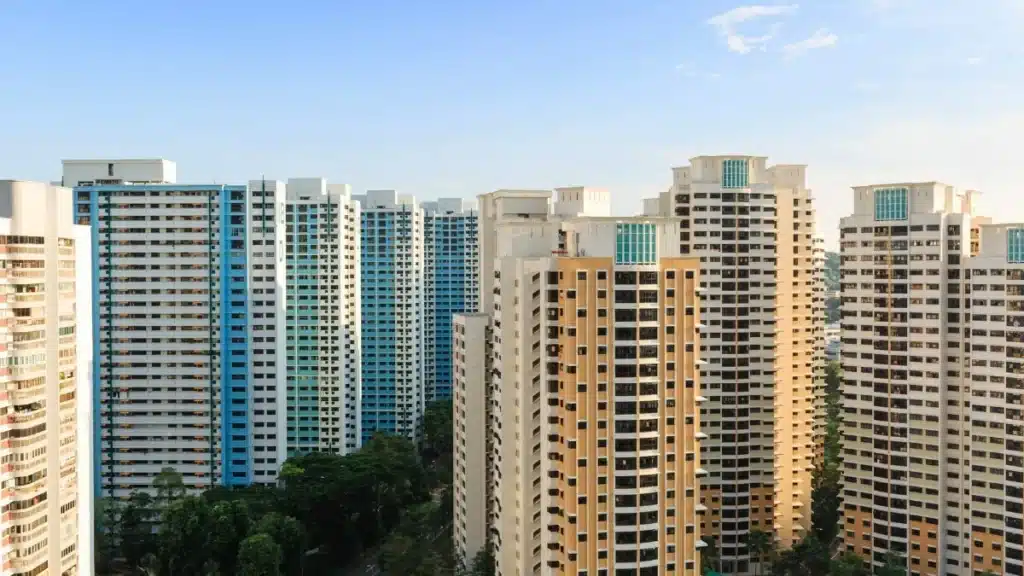
Singapore must prepare for the challenges of ageing housing estates as leaseholds shorten and owners grow older, said Madam Ho Ching in a recent commentary on Facebook.
She cautioned that when properties are left with only 10 to 15 years on their leases, owners may lose the incentive to maintain their homes. This problem, she added, is compounded when residents themselves are elderly, with limited energy or resources.
“They have no energy or resources to keep up with the general state of good housekeeping, or they may think it is not worth their while as they only have a couple of decades more to enjoy life,” she wrote.
Risks of Urban Slums
Mdm Ho noted that such attitudes could lead to neglect and deterioration, raising the risk of urban slums developing in Singapore, as seen in other Asian cities.
In many countries, she observed, the absence of rules requiring apartment owners to form committees and contribute to maintenance funds has resulted in even relatively young developments falling into disrepair.
Cracks Already Showing
While Singapore has safeguards such as HDB town councils and condominium management committees, Mdm Ho pointed out that cracks are already showing.
Residents are often reluctant to approve higher maintenance charges, leading to shrinking sinking funds. As a result, major repairs may be delayed, lifts break down more frequently, and common areas see reduced upkeep.
Ageing Systems, New Challenges
She recalled that in the 1980s, when HDB construction was accelerated, some blocks experienced spalling concrete, requiring government intervention. Although construction standards have since been tightened, ageing flats will inevitably face issues with wiring, plumbing and other systems.
Technological change also risks making older infrastructure obsolete.
HDB’s upgrading programmes, such as the Home Improvement Programme (HIP) and the Selective En bloc Redevelopment Scheme (SERS), have helped refresh estates and sustain property values.
Mdm Ho suggested that natural milestones for major upgrades could fall around the 70-year and 85-year marks of a flat’s lease.
No False Hope On Leases
Mdm Ho said that HDB flats should be viewed not only as new homes at the point of sale.
They should also be viewed as long-term assets with a life cycle that requires regular care throughout their life cycle.
She cautioned against giving false hope that 99-year leases could somehow be extended.
“The 99-year leasehold applies not just to HDB apartments but also to private housing,” Mdm Ho wrote. “Even freehold apartments are not likely to stand forever without some kind of upgrade or redevelopment at some point.”
Here’s the transcript of Mdm Ho Ching’s post in full:
How will the owners think of their properties with a short balance left of their leasehold, like 10-15 years left?
One concern is that owners near the end of their leases will not bother to maintain or keep their flats and the common property around them in good conditions.
This happens also when owners are getting old.
They have no energy or resources to keep up with the general state of good housekeeping, or they think it is not worth their while as they have a couple of decades more to enjoy life.
So we may end up with urban slums.
We see this in other cities all over the world, including in Asia where we are becoming super aged and ultra aged quite fast esp in the cities.
In some countries, we already see urban slums developing even for relatively young and quite posh devts.
This is bcos there is no regulations that require owners of apartment blocks or residential estates to form a committee to look after their estates and pay maintenance charges that go into sinking funds for repair and repainting of the common areas.
And so urban slums develop quite quickly.
In Sg, we have HDB or town councils doing that for HDB residential areas, and mgt committees for private residential estates that have shared common areas.
Even then, we are beginning to see some cracks bcos residents will typically not vote to increase their maintenance charges, and so the sinking funds become less and less adequate to cover major repairs.
And so the lifts break down more often, instead of being replaced or upgraded, and the common areas become less and less well maintained.
This happense even when these provate housing high rise devts are less than 50 or 30 years old.
So what happens for even older estates with shorter leaseholds left? Chances are the owners will have even less interest to put up money to do proper repairs.
In Sg, there was a period when HDB construction was rushed – this was in the 80s – not sure why it happened.
But there are estates from that particular era where we find spalling concrete starting to fall off, and HDB had to mount an effort to repair and treat such spalling concrete.
Fortunately, these are a minority, as we tightened up standards and construction supervision.
But as the flata get older, are they more likely to become slums from neglect?
Chances are this is more likely to happen for private condos than for the HDB estates.
But: we also known that not all systems will last 99 years.
Cables and wiring will fail, piping will deteriorate and leak, and the plumbing may also go awry.
Some systems may also become obsolete, like how the black and white TVs got obsoleted by the colour TVs, and the analog TV systems got obsoleted by digital TV.
If we have 30 years of leasehold to go, we may go ahead to upgrade ahead of the trend.
But if we have a short balance, we may think it not worthwhile, right? Or if we are old, we may think we have few years left to enjoy ant new fangles systems and would just prefer to save the money instead?
So the risk is that within the last 10-30 years could see more likelihood of urban slums happening?
We know we need a kind of major repair and upgrades for propeety assets every 30 years or so, and a minor refresh or common area or internal improvement in between at around the 15 years mark.
So far, we have HIPs and SERs and other regular programmes for HDB housing to be refreshed and/or upgraded. This keeps the property values up without deteriorating through neglect.
So the 70 year mark is another natural milestone for either a major upgrade or refresh, with another at the 85 year mark.
So we will need to think HDB not just at point of sale as a new BTO project for first timer owners.
We need to think life cycle both for the original buyers and their families, and the life cycle for the property, so that we can thread the needle well.
Meanwhile, let’s not give false hope that the 99 leasehold can somehow be shifted.
Btw, the 99-year leasehold applies not just to HDB apartments but also to private housing too.
And even freehold apartments are not likely to stand forever without some kind of upgrade or even redevt at some point.