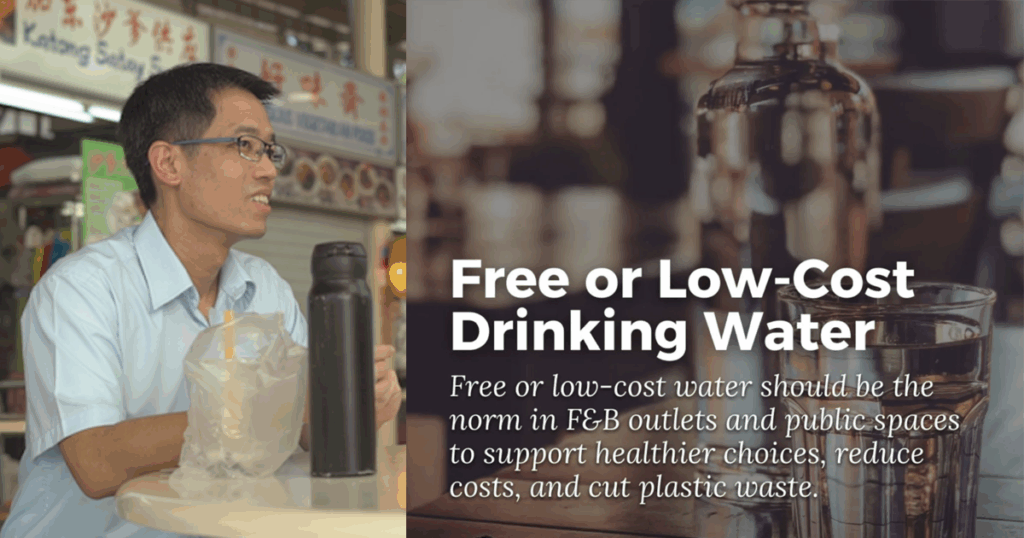
Water is abundantly available in Singapore.
You can bring your own water in a reusable bottle — it’s legal, practical, and easy. This option already exists for anyone who genuinely does not want to pay for water at an eatery.
People don’t hesitate to pay $1 or more for a bottle of water from a supermarket.
So when complaints arise about having to pay the same amount at a food establishment, it’s clear that the issue is not price. It’s convenience.
Convenience without bearing any cost
But let’s remember that water is not free for F&B operators.
Whether it’s served hot, chilled, or with ice, plain water comes with real costs — manpower, dishwashing, glassware, cleaning supplies, utilities.
These are operating expenses, especially significant for small and independent eateries.
What customers are really asking for is the convenience of being served water — without bearing any of the cost.
That may be feasible for large chains, but it’s much harder for smaller players like coffee shops and family-run stalls.
As one café owner told CNA:
“On a good month, eateries like ours make about 10 to 20 per cent profit. More often than not, we make a lot less, especially in this current economic climate. So we charge 50 cents for free-flow tap water because every cent counts.”
Another restaurant owner said:
“The restaurant business is tough. Our profit margin is small. In what other industry would making 10 to 20 per cent profit on a good month count as good business? But that’s the norm for restaurants. Bigger groups may absorb the cost, but utilities are just one of many overheads for small businesses like ours.”
People nudged to buy sugary drinks?
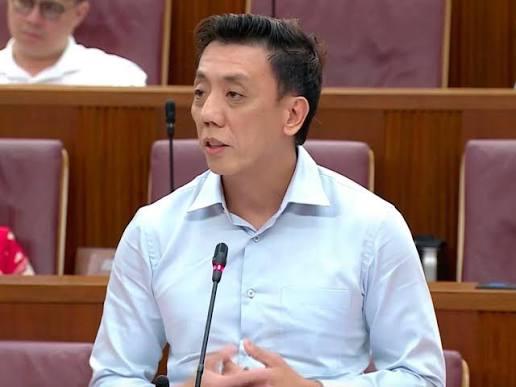
In Parliament, Workers’ Party MP Gerald Giam said some eateries charge the same for water as they do for sugary drinks, which he claims nudges people toward less healthy choices.
But this is a flawed argument.
If someone chooses Coke over water because both cost $1, the issue isn’t price — it’s preference.
The real solution lies in better education on healthy choices, not in forcing eateries to offer free water or change their pricing.
And to be fair, we’ve already made good progress.
Thanks to efforts by the Ministry of Health and public education, more Singaporeans now read nutrition labels and make conscious decisions.
That progress didn’t come from regulation — it came from education and awareness.
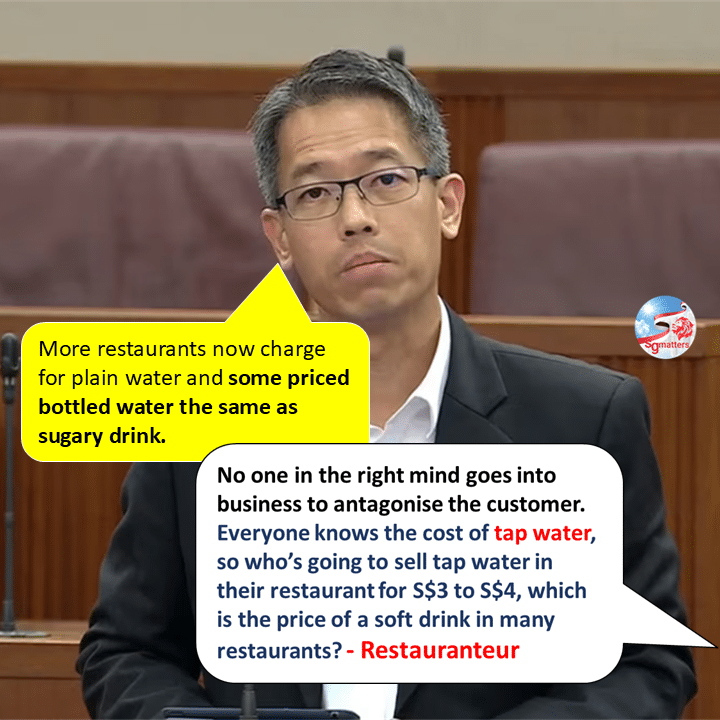
Are there eateries that charge $3 for water?
Yes — and context matters. It’s not just plain tap water.
Upscale restaurants often serve premium filtered water through built-in systems, usually offered free-flow.
Take Angie’s Oyster Bar & Grill, for example. They serve unlimited Nordaq water, specifically chosen to preserve the taste of oysters. Notably, 80% of the proceeds from water sales there go to charity.
Water filtration systems aren’t cheap. They can cost between S$1,000 to S$3,000 a month, not including maintenance, labour, and opportunity cost.
A fine-dining chef told CNA his restaurant doesn’t charge for water, but the cost is still there — just absorbed into menu pricing.
Another restaurant owner said it plainly:
“A small bottle of water from 7-Eleven can cost S$3.50. But when a restaurant offers unlimited still or sparkling water for S$3, some people go nuts. Isn’t that an odd double standard?”
Indeed, it is.
Utilities cost money, and (when you offer free tap water), it often leads to reduced beverage sales, so it’s an opportunity cost at the end of the day.
Conclusion: the solution is very simple
If a patron truly prefers plain water, and doesn’t mind it coming from the tap, they always have a simple solution: bring their own.
It’s not difficult. And it certainly doesn’t require government intervention.
In the end, we don’t need the government micro-managing every dining table.
Let eateries make the decision that suits their model — and let customers vote with their wallets.