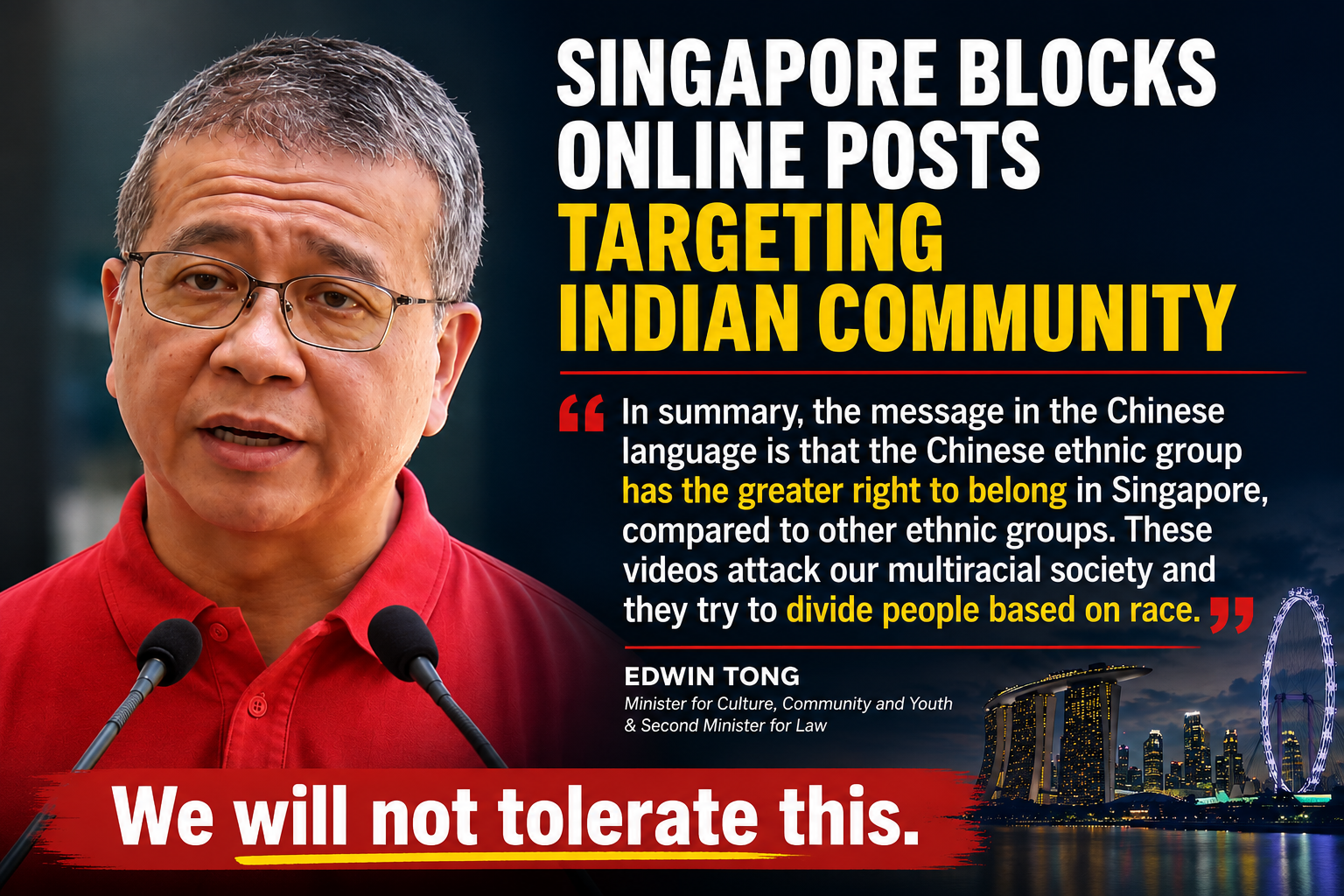

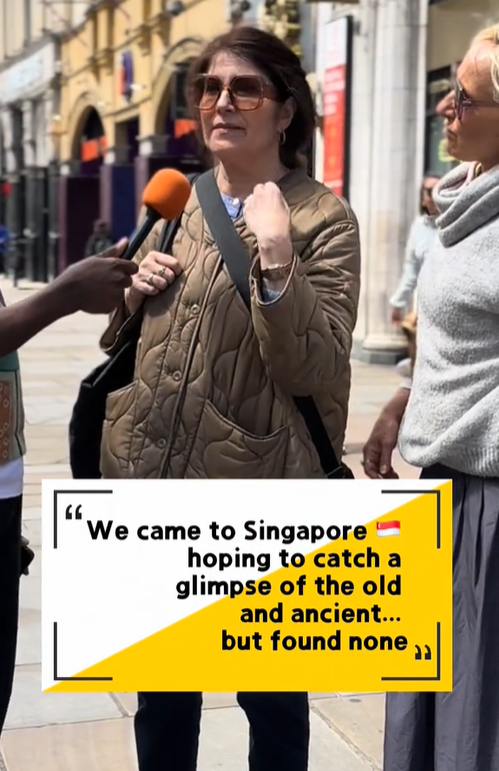
A UK woman recently described Singapore as “cold,” with “no personality” and “heritage” based on her previous visit.
She was disappointed by the absence of ancient relics as she had hoped to find something old like an “ancient story” during her visit.
Well, Singapore is a small country — you won’t find grand ruins scattered randomly across the city.
But that doesn’t mean there’s no heritage. It means you need to know where to look.
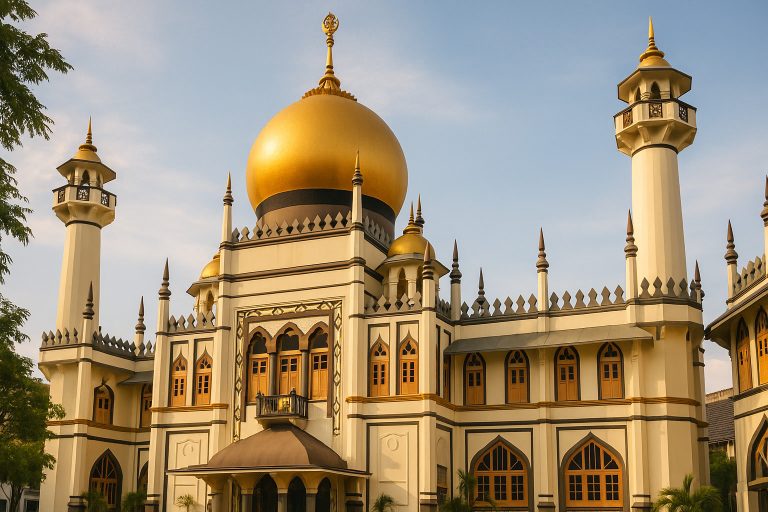
Right in the heart of the city, for example, you’ll find the Sultan Mosque with its golden domes, a centrepiece of Kampong Glam and Malay-Muslim heritage.
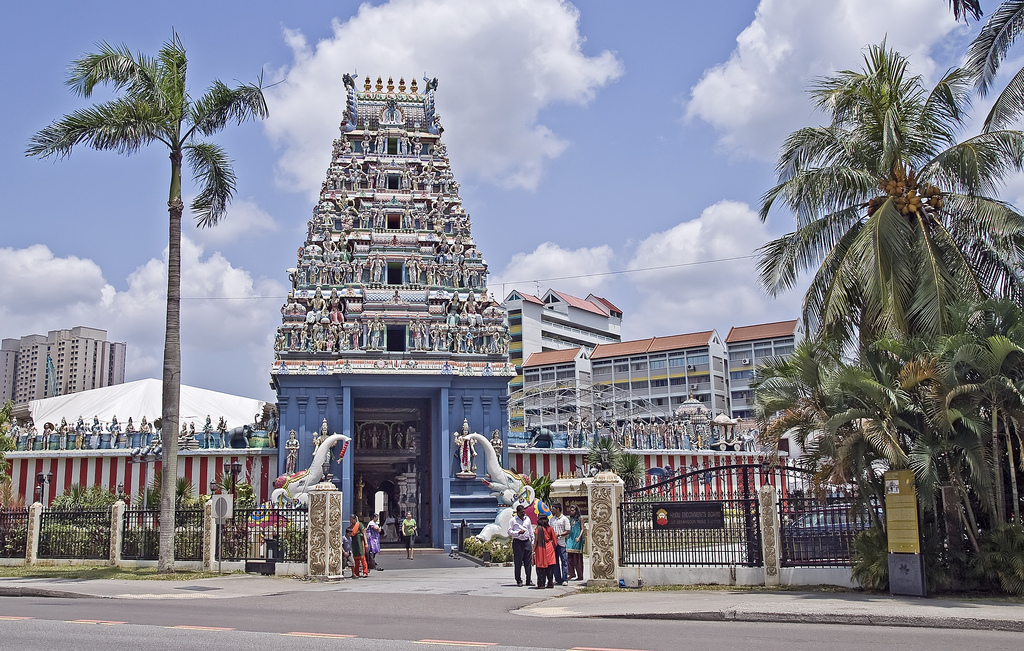
Just a short distance away, Sri Srinivasa Perumal Temple, one of Singapore’s oldest Hindu temples, stands along Serangoon Road — rich in Dravidian architecture and history. It is a national monument.
Built in 1855, its five-tiered gopuram is adorned with the various avatars of Vishnu and other Hindu deities vividly, as well as floral and abstract motifs.
In the civic district, the Armenian Church, the oldest Christian church here, sits quietly among modern skyscrapers. Built in 1835 and designed by Irish architect, George D. Coleman, it is considered as one of his masterpieces.
On 26 March 1836, the church was consecrated and dedicated to St. Gregory the Illuminator, the patron saint and the first official head of the Armenian Apostolic Church. The Church was gazetted as a National Monument by the Singapore’s National Heritage Board on 06 July 1973.
This spiritual place serves as a tribute to the once influential Armenian community of Singapore. They were lawyers, merchants, and entrepreneurs. Famous among them were the Sarkies Brothers who built and managed the Raffles Hotel, Agnes Joaquim who hybridised the orchid Vanda ‘Miss Joaquim’ (named as Singapore’s national flower), and Catchick Moses who founded the Strait Times.
Nearby, St Andrew’s Cathedral — with its striking neo-Gothic design — continues to be a spiritual and architectural landmark.
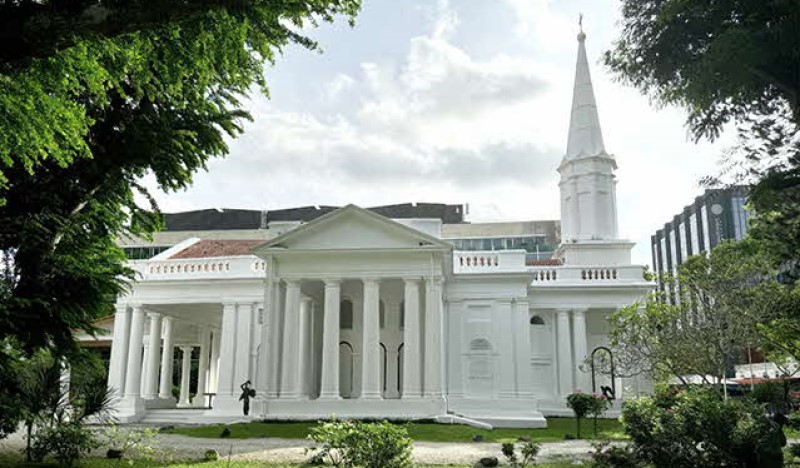
All of these sites are real, functioning places of worship. They are not just relics. They are lived-in, active parts of communities that have shaped Singapore for generations.
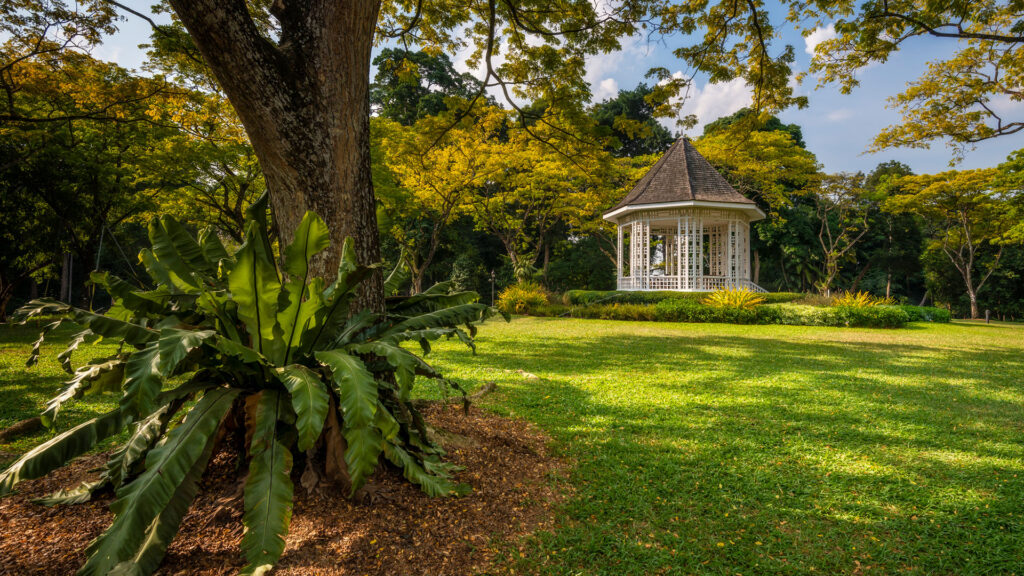
Then there’s the Singapore Botanic Gardens — not just a park, but a UNESCO World Heritage Site. It’s over 160 years old, and played a key role in Southeast Asia’s agricultural history, including the spread of rubber.
Heritage in Singapore isn’t always loud or showy. It’s woven into our religious landmarks, preserved in our green spaces, and expressed in the everyday life of our diverse communities.
By far, Singapore’s greatest heritage is the diversity of its people.
While we do have historic buildings, cultural districts, and preserved green spaces, what truly defines Singapore’s identity is how different cultures, religions, and traditions coexist — not just side by side, but intertwined in everyday life.
Consider this:
You can hear the call to prayer from a mosque, temple bells ringing, and church hymns — all within walking distance of one another.
Our festivals — from Chinese New Year to Hari Raya Puasa, Deepavali to Christmas — are celebrated nationally, and often cross cultural lines.
Our food — laksa, roti prata, nasi lemak, Hainanese chicken rice — is a reflection of this rich, shared heritage.
Even our national pledge — “regardless of race, language or religion” — enshrines this diversity as a national ideal.
Other countries may have centuries-old monuments. But few can claim a social fabric so deliberately and successfully woven from such a wide array of cultures.
So yes — Singapore has heritage you can see. But its greatest heritage is what you can feel: a people bound together by shared space, mutual respect, and a living tapestry of cultures.
@emma_a_cosmos2 Her experience for the first time visiting #singapore 🇸🇬
♬ original sound - emma_a_cosmos