You hear this warning often: AI is coming for our jobs. From chatbots replacing customer service officers to automation transforming finance, law, and even medicine. The fear is real and understandable.
But hey, here’s a different perspective. AI is not here to take your job. It’s here to change it! And Singapore is one of the few countries preparing seriously and proactively for that change.
In late 2023, the Government committed $1 billion under the National AI Strategy 2.0 to build a thriving AI ecosystem and to help Singaporeans adapt and thrive in an AI-driven world. So instead of resisting the tide, let’s all learn to ride it together.
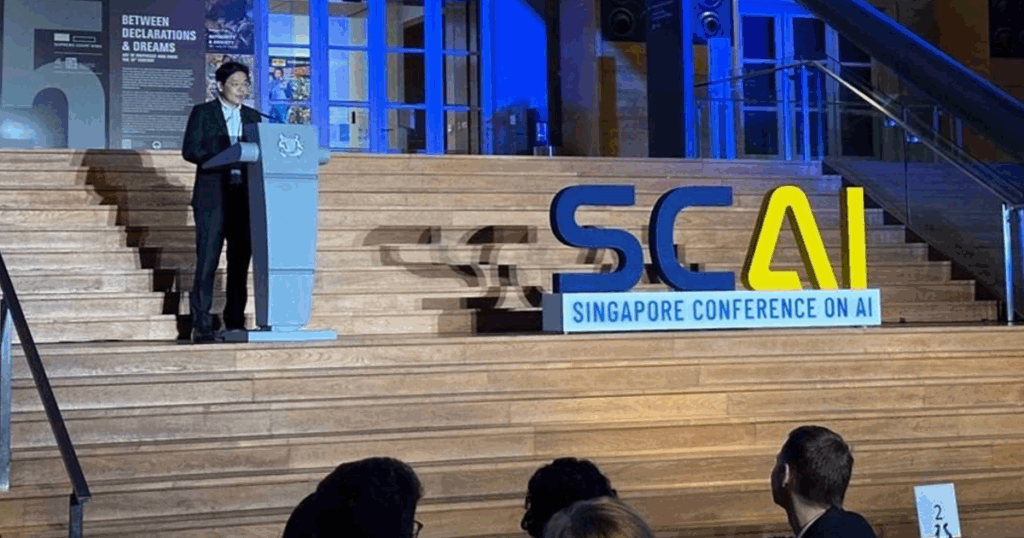
Singapore believes in the transformative potential of AI. Our second National AI Strategy, or NAIS 2.0, represents Singapore’s commitment to realise the benefits of AI, and to create exciting new opportunities. It outlines our vision for Singapore to be a place where AI serves as a force for good, and where we harness AI to uplift and empower our people and businesses.
Lawrence Wong 2023 Tweet
AI Won’t Replace You But Someone Who Uses AI Might
Since the release of ChatGPT by OpenAI on 30 November 2022, Artificial Intelligence (AI) has gone mainstream.
AI is not a single technology. It’s a set of tools: some powerful, some simple, most still needing human judgment to be effective. Whether it be in accounting, teaching, logistics, or marketing, AI won’t render these roles obsolete, but it will reward those who know how to work with it.
This is why we should not fear AI. Instead, we should embrace AI not just as something good to have, but something we must know.
Singapore’s approach is not about pushing workers out of jobs. It’s about helping you transform how you work.
So what can you do? Be a student. Learn AI.
SkillsFuture funds AI courses in areas like data analytics, AI ethics, and prompt engineering.
Prompt engineering is the process of crafting specific and well-structured inputs called prompts to guide generative AI models to produced the desired outputs. It’s essentially the art of communicating effectively with AI to achieve specific results, much like providing clear instructions to a human assistant.
Mid-career workers can make use of the Career Conversion Programmes to pivot to tech or AI-supported roles.
You can launch your career to new heights with TeSA, a SkillsFuture initiative that supports deeper tech training for professionals and mid-career PMETs. Check it out!
The Human Edge In An AI World
AI will change jobs. But it doesn’t have to cost livelihoods.
AI can simulate empathy (e.g., in a chatbot saying “I understand”), but it doesn’t genuinely feel anything. It doesn’t experience compassion, concern, or moral responsibility.
AI can assist with teamwork (like coordinating schedules or suggesting edits), but it doesn’t build trust, or inspire people towards a goal.
AI cannot create with purpose. That is to say, AI can generate content, music, or images — but it doesn’t create with intention, meaning, or values.
AI is a powerful tool, but tools don’t have souls. What sets humans apart is our conscience, our ethics, our ability to connect and aspire. These remains beyond the reach of machines.
Singapore’s approach recognises that the most valuable asset is still the human being, one who can learn, adapt, and work with AI, not against it.
Its workforce will pair technical AI skills with human qualities. That’s the real advantage, and it is something no algorithm can replace.