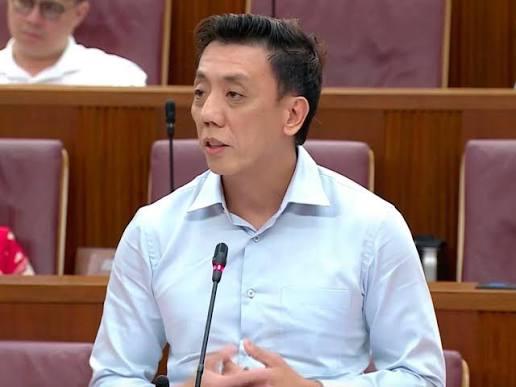
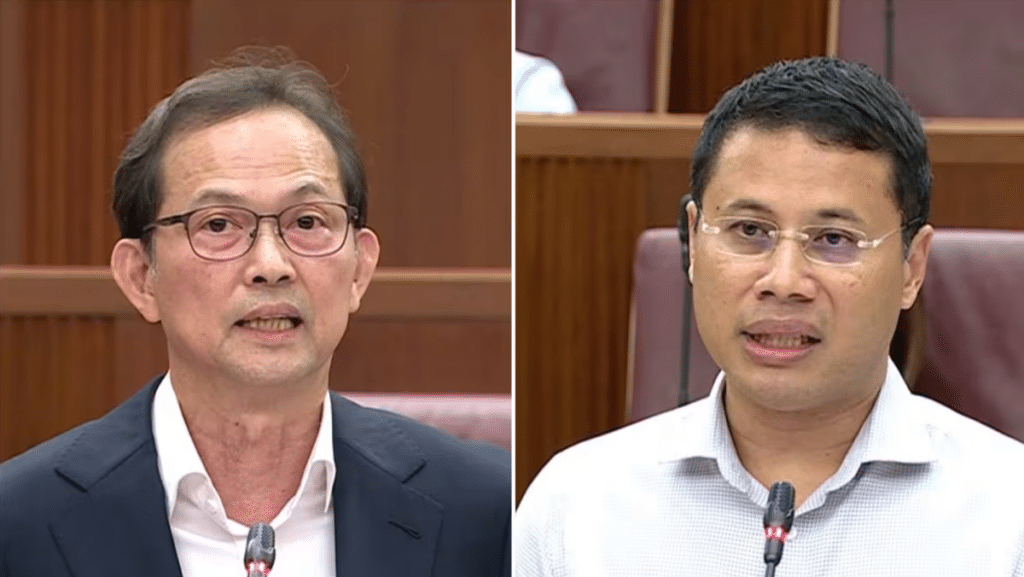
In Parliament (7 March), PSP Leong Mun Wai compared HDB affordability for university and Vocational and Industrial Training Board (VITB) graduates in 1979, with affordability today, and claimed that graduates are worse off today.
Responding to Mr Leong, Minister Desmond Lee said that Singapore in 1979 is firstly very different from Singapore in 2025.
There were fewer graduates then. The HDB flat in 1979 was very different from today, and there was only a very rudimentary resale market with strict conditions and limited financing.
Fewer graduates in 1979 compared to today
In 1979, only 4% of each cohort went to university. Today, it is more than 40%.
Mr Leong used median wages of VITB graduates in 1979 without mentioning that only 9% of each cohort went to VITB.
Today, around 60% of each cohort go to Polytechnic and ITE.
Today, the vast majority of each cohort today goes to university, Polytechnic and ITE, compared to only around 13% going to university and VITB in 1979.
Essentially, Mr Leong was comparing housing affordability for a small group in 1979 with housing affordability for the vast majority of Singaporeans today, Minister Desmond Lee said.
He omitted to mention the affordability picture for the majority of Singaporeans back in 1979, who were less well-educated, less skilled, and earned much less, in those early days of Singapore.
The HDB flat in 1979 is also very different from the HDB flat in 2025.
In the 70s, flats were simple, functional homes with limited amenities and transport links.
Today, the HDB flat comes with modern amenities and better transport connectivity, improving residents’ standard of living.
Back in 1979, 68% of the population lived in HDB flats, with 62% owning them, mostly among higher-income groups.
Today, over 80% of Singaporeans live in HDB homes, and more than 90% own their flats.
In 2024, more than 8 in 10 first-time buyers used little to no cash to pay for their HDB monthly mortgages.
The housing market in 1979 was very different
In the 1960s and 1970s, there was almost no resale market to speak of.
Back then, there was limited potential for appreciation. It was not quite a store of value. It was a basic home and expense for Singaporeans, he said.
In the 1960s, buyers had to return the flat to HDB at a sum that was less than what they had initially paid.
In the 1970s, there was only a very rudimentary resale market, with strict conditions and limited financing.
The resale market only started to mature in the 1980s and 1990s, after changes in conditions for resale and mortgage financing policies.
Today, our HDB flats are both a home and a store of value for Singaporeans, which they can monetize in their older years for retirement by selling on the open market, renting out a room or a flat, or through our Lease Buyback Scheme, and so on.
PSP’s Affordability Housing Scheme is not an original idea but one adapted from the past
From 1968 to 1987, in the early years of HDB, the flat price was priced based on construction costs, Mr Lee said. The PSP’s AHS uses a similar idea.
“In a way, PSP’s idea is not an original idea, but an idea adapted from the past,” Mr Lee said.
Leong Mun Wai failed to mention what happened in the two years after 1979
Construction cost then, as it is today, fluctuates based on economic factors, like labour availability, prices of construction materials, global commodities, like oil.
Around 1979 and 1980, construction cost went up by 30%, because there was a construction boom. As a result, HDB flat prices went up by 15% in 1979, another 20% in 1980 and another 38% in 1981.
But Mr Leong had selectively presented the 1979 data, but did not mention what happened the next one to two years.
HDB flats are not priced to recover construction and land costs
“We have long since moved away from the system where HDB flats’ price were based on construction cost. In fact, we do not price flats to recover land and construction cost,” Mr Lee said.
“We look at the market value of the flat, apply significant market discounts to bring the price down so that there are flats that are affordable to Singaporeans of different income levels. And then, we do means-testing for explicit grants, on top of the market discounts. This ensures HDB flats remain affordable to a wide range of incomes.”
PSP wants to go backwards, to the time where housing was a shelter and an expense
Since the 70s, we have matured and progressed as a society and improved upon our initial policies, Mr Lee said.
The PSP want to go backwards, to the time where housing was a shelter and an expense, and did not serve as a store of value and assurance for retirement, where Singaporeans did not have a stake – when they leave, according to the AHS, just return keys and move on.
“Is this really the kind of Singapore we want to have?”
“We have come a long way since 1979. We will continue to look forward instead, to ensure that our policies remain relevant, effective in providing public housing as affordable, accessible, and inclusive for Singaporeans,” Mr Lee said.