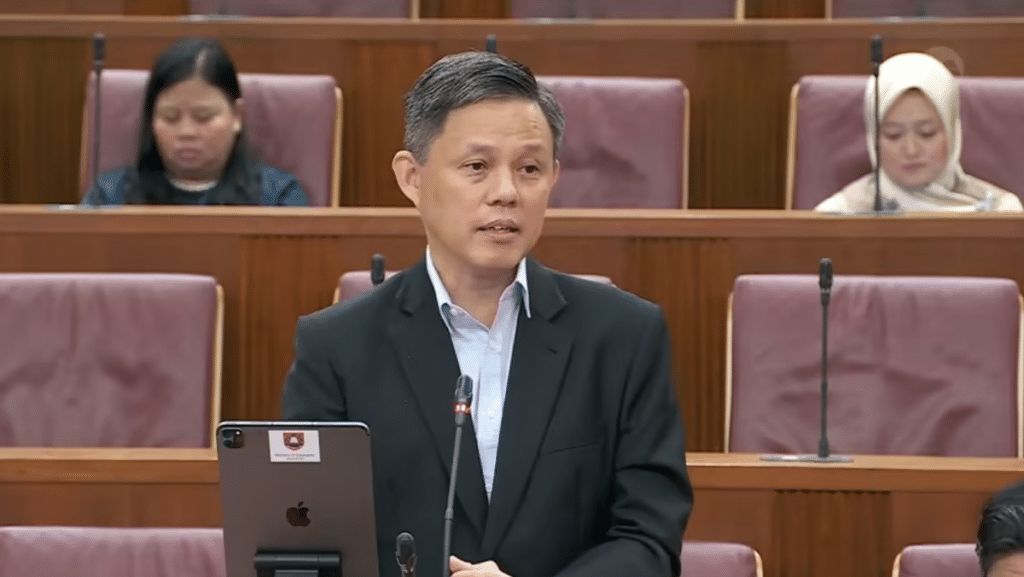
It has often been suggested that MOE should reduce class sizes. It’s a proposed solution that MOE takes seriously, Education Minister Chan Chun Sing said at MOE Committee of Supply Debate (2025).
However, it is important for us to bear in mind what problems we are trying to solve first, he added.
What problem are we trying to solve?
Is the problem we’re addressing a need to improve teacher-student interaction? Or is it to reduce teachers’ workload? Or perhaps we believe that smaller classes are always better, regardless of the subject matter or the quality of the teacher?
“We all want to reduce workload for our teachers. But with a finite teaching force and a certain number of students, do we mean to ask our teachers to teach smaller classes but more classes?” Mr Chan asked.
“Or do we mean we should employ more teachers, perhaps doubling our teaching force to halve all class sizes?
“Is that feasible without affecting quality?” Mr Chan asked.
“Or do we mean for our teachers to teach less?”
Our curriculum is already benchmarked with other developed countries. We are already teaching just similar amounts or sometimes less than others, Mr Chan said.
In fact, there are often calls for the MOE to expand the curriculum, including adding life skills, future skills, and soft skills, to better prepare students for life.
No fixed teaching class size
There is no fixed class size in all our schools, Mr Chan said.
“We allocate our finite teaching resources according to the needs of our students, complemented by technology,” he said.
Most form classes have two form teachers to guide the social-emotional development of our children, said Mr Chan.
“Students with higher needs, have smaller teaching class size. Classes that benefit from student interaction have bigger class sizes. For classes where we can use technology to scale, we have even “bigger class sizes” in the hundreds and yet achieve mass customisation.”
The goal, Mr Chan said, is not to overprotect students or over-support learning.
Instead, it is to refocus teachers’ energy to encourage students to take ownership of their learning and activities. This approach will help them learn more for life.
Mr Chan said he was in favour of organising resources to achieve that effective class size based on needs and not regardless of needs.