
Should the voting age be lowered to 18?
Some, including politicians, have argued that if an 18-year-old can get married or handle a rifle, then they are ready to vote.
Let’s call this the NS argument.
The NS Argument
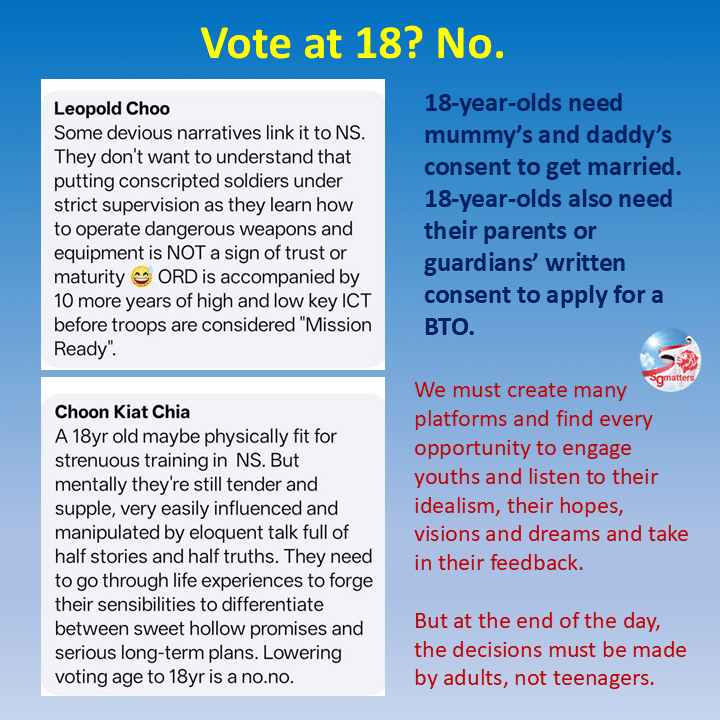
One thing is clear: if 18-year-olds who have just enlisted in the army are sent to the frontlines in a war, many—including their parents—would be horrified.
Why?
Because in reality, 18-year-olds in the military are typically still undergoing basic training.
They operate under close supervision and not yet entrusted with independent command or high-stakes decision-making.
In wartime, it is the experienced, fully trained soldiers who are deployed to frontline combat roles. The military is structured to reflect and accommodate the inexperience of its youngest recruits—it trains them before entrusting them.
The brain of an 18-year-old
𝐋𝐞𝐭’𝐬 𝐛𝐞 𝐦𝐢𝐧𝐝𝐟𝐮𝐥 𝐭𝐡𝐚𝐭 𝐚𝐭 𝟏𝟖, 𝐲𝐨𝐮𝐧𝐠 𝐩𝐞𝐨𝐩𝐥𝐞 𝐚𝐫𝐞 𝐢𝐧 𝐚 𝐭𝐫𝐚𝐧𝐬𝐢𝐭𝐢𝐨𝐧𝐚𝐥 𝐩𝐡𝐚𝐬𝐞.
𝐓𝐡𝐞𝐲 𝐚𝐫𝐞 𝐧𝐨 𝐥𝐨𝐧𝐠𝐞𝐫 𝐜𝐡𝐢𝐥𝐝𝐫𝐞𝐧, 𝐛𝐮𝐭 𝐭𝐡𝐞𝐲 𝐚𝐫𝐞 𝐚𝐥𝐬𝐨 𝐧𝐨𝐭 𝐲𝐞𝐭 𝐟𝐮𝐧𝐜𝐭𝐢𝐨𝐧𝐢𝐧𝐠 𝐚𝐬 𝐟𝐮𝐥𝐥𝐲 𝐢𝐧𝐝𝐞𝐩𝐞𝐧𝐝𝐞𝐧𝐭 𝐚𝐝𝐮𝐥𝐭𝐬 𝐞𝐢𝐭𝐡𝐞𝐫.
Most have not assumed major financial, familial, or civic responsibilities.
Neuroscience and psychological research support this view.
𝐓𝐡𝐞 𝐚𝐝𝐨𝐥𝐞𝐬𝐜𝐞𝐧𝐭 𝐛𝐫𝐚𝐢𝐧, 𝐢𝐧𝐜𝐥𝐮𝐝𝐢𝐧𝐠 𝐭𝐡𝐚𝐭 𝐨𝐟 𝐚𝐧 𝟏𝟖-𝐲𝐞𝐚𝐫-𝐨𝐥𝐝, 𝐢𝐬 𝐬𝐭𝐢𝐥𝐥 𝐦𝐚𝐭𝐮𝐫𝐢𝐧𝐠—𝐩𝐚𝐫𝐭𝐢𝐜𝐮𝐥𝐚𝐫𝐥𝐲 𝐭𝐡𝐞 𝐩𝐫𝐞𝐟𝐫𝐨𝐧𝐭𝐚𝐥 𝐜𝐨𝐫𝐭𝐞𝐱, 𝐰𝐡𝐢𝐜𝐡 𝐠𝐨𝐯𝐞𝐫𝐧𝐬 𝐝𝐞𝐜𝐢𝐬𝐢𝐨𝐧-𝐦𝐚𝐤𝐢𝐧𝐠, 𝐢𝐦𝐩𝐮𝐥𝐬𝐞 𝐜𝐨𝐧𝐭𝐫𝐨𝐥, 𝐚𝐧𝐝 𝐜𝐫𝐢𝐭𝐢𝐜𝐚𝐥 𝐭𝐡𝐢𝐧𝐤𝐢𝐧𝐠.
According to the U.S. National Institute of Mental Health, this part of the brain continues to develop well into the mid-to-late 20s.
This age group also tends to place a 𝐡𝐢𝐠𝐡 𝐯𝐚𝐥𝐮𝐞 𝐨𝐧 𝐩𝐞𝐞𝐫 𝐚𝐜𝐜𝐞𝐩𝐭𝐚𝐧𝐜𝐞 and is 𝐬𝐭𝐢𝐥𝐥 𝐟𝐨𝐫𝐦𝐢𝐧𝐠 𝐭𝐡𝐞𝐢𝐫 𝐩𝐞𝐫𝐬𝐨𝐧𝐚𝐥 𝐢𝐝𝐞𝐧𝐭𝐢𝐭𝐲.
As a result, they are especially 𝐬𝐮𝐬𝐜𝐞𝐩𝐭𝐢𝐛𝐥𝐞 𝐭𝐨 𝐬𝐨𝐜𝐢𝐚𝐥 𝐭𝐫𝐞𝐧𝐝𝐬, 𝐩𝐞𝐞𝐫 𝐩𝐫𝐞𝐬𝐬𝐮𝐫𝐞, 𝐚𝐧𝐝 𝐭𝐡𝐞 𝐟𝐞𝐞𝐝𝐛𝐚𝐜𝐤 𝐥𝐨𝐨𝐩𝐬 𝐨𝐟 𝐬𝐨𝐜𝐢𝐚𝐥 𝐦𝐞𝐝𝐢𝐚.
Legal age to marry
In Singapore, the legal age to marry without parental consent is 21.
Those aged between 18 and 21 require the consent of a parent or legal guardian to register a civil marriage.
In other words, at 18, you still need “Daddy and Mummy’s” permission to get married.
Applying for a BTO
Similarly, when applying for a Build-To-Order (BTO) flat under the Fiancé/Fiancée Scheme, applicants must be at least 21 years old.
Those between 18 and 21 can only apply with written consent from their parents or guardians.
All of this reflects one reality: 18-year-olds are at the threshold of adulthood, but society still recognizes—and accounts for—their need for guidance and supervision.
Given this, we must question whether they are truly ready to make informed and independent choices at the ballot box.
Legal Responsibility ≠ Political Readiness
It’s true that 18-year-olds are treated as adults under the law. They can be tried in court, face jail terms, fines, and have criminal records.
But the legal standard is about accountability—not readiness.
Laws must draw a line somewhere to apply consequences for wrongdoing. But facing punishment is not the same as exercising sound judgment.
Just because an 18-year-old is legally responsible for their actions, it doesn’t mean they have the political maturity to make complex decisions about governance, public policy, or national direction.
Can Drive = Can Vote?
Another common argument: 18-year-olds are eligible for a driving license—so we trust them with vehicles capable of causing harm, but not with a vote?
This is misleading.
Driving is a technical skill that can be taught, tested, and regulated. It involves coordination, rule-following, and reflexes.
Voting, on the other hand, requires mature judgment, critical thinking and awareness of complex national issues.
You can train someone to drive in a few months. Political maturity takes much longer to develop—and can’t be taught through a manual or tested with an exam.
Drinking Age = Voting Age?
Some point to the fact that 18-year-olds are legally allowed to consume alcohol.
But drinking is a personal choice, with risks that primarily affect the individual and those close to them. It’s a social compromise, not a stamp of maturity.
In fact, the very existence of laws regulating drink-driving shows that we don’t assume 18-year-olds – or anyone for that matter – will act responsibly with alcohol.
If responsible drinking were guaranteed, we wouldn’t need such laws.
So why should being legally able to consume alcohol at 18 be proof they are ready to vote?
They pay CPF, GST and Tax – Why no vote?
Contributing to national revenue doesn’t automatically grant political agency.
Take for example foreign workers in Singapore. They contribute to our economy and pay taxes too—but they don’t have voting rights because they are not citizens.
Let’s not confuse economic participation with civic comprehension.
Paying taxes doesn’t mean one understands fiscal policy, trade-offs in national budgets, or the long-term impact of social spending.
Voting is about more than contribution. It’s about comprehension and informed judgment.
But Their Voices matter!
They do.
Just because 18-year-olds are not ready to vote, it does not mean their voices are not worthy to be heard.
How can we ensure that teenage voices, not just 18-year-olds, are heard even if they cannot yet vote?
The answer lies in creating multiple platforms and opportunities to engage them — to listen to their ideals, their visions for society, and the aspirations they hold for the future. Their perspectives matter, and we must make space for their voices in meaningful conversations about the world they will inherit.
However, at the end of the day, the responsibility for making decisions must rest with the adults. As Mr Lee Kuan Yew said in 1967, these decisions must be made “in such a way that when the teenagers become adults and they look back on these decisions, they will be proud of the generation that went before them.”