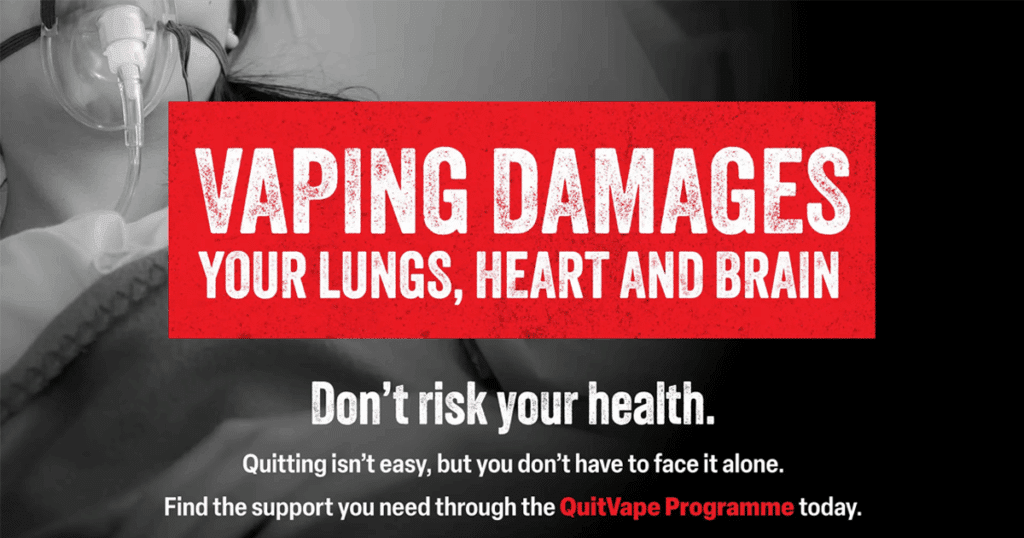
Despite the introduction of various regulatory measures, vaping rates continue to climb in many parts of the world. According to Dr Wu Shin Ling, writing in the Bulletin of the World Health Organization, this trend reflects a deeper problem of inconsistent public messaging, particularly when governments promote e-cigarettes as safer alternatives for adult smokers while simultaneously warning youths against their use.
Dr Wu argues that such mixed messages undermine prevention efforts and weaken the effectiveness of public health campaigns.
In contrast, Singapore has taken what he calls a “radically different path.” Since banning vaping in 2018, the country has tightened its stance further. In August 2025, Prime Minister Lawrence Wong announced that vaping would henceforth be treated as a drug offence, carrying harsher penalties for possession, sale, or use.
Clear Messaging
By classifying e-cigarettes as controlled substances, Singapore has reframed vaping not as a tobacco-control issue but as a matter of drug enforcement. Dr Wu notes that this removes the ambiguity that has plagued other countries’ policies and “sends a clear signal that vaping is unacceptable.”
He adds that the approach carries both psychological and public-health implications. Research on social norms suggests that clear, consistent messaging is more effective in shaping behaviour than nuanced risk communication. In this light, Singapore’s strategy prioritises clarity over harm-reduction narratives and reflects an understanding of how difficult it is to reverse nicotine dependence once established during adolescence.
Key lessons from Singapore
Dr Wu identifies three key lessons from Singapore’s experience.
First, clarity of framing matters. By treating vaping as a drug issue, Singapore eliminates policy ambiguity and reinforces both messaging and enforcement.
Second, prevention is easier than reversal. As seen in decades of tobacco-control experience, curbing an epidemic before it starts is far easier than reversing entrenched patterns of use.
Third, every policy involves trade-offs. While prohibition can protect adolescents, it also limits harm-reduction options for adult smokers. Each country must weigh this balance within its own cultural and legal contexts.
Singapore’s ban, he writes, offers researchers a unique opportunity to study how prohibition affects youth behaviour, illicit trade, smoking patterns, and public trust in health authorities. Such evidence will be valuable for other nations struggling to decide whether prohibition, regulation, or hybrid models best serve public health goals.
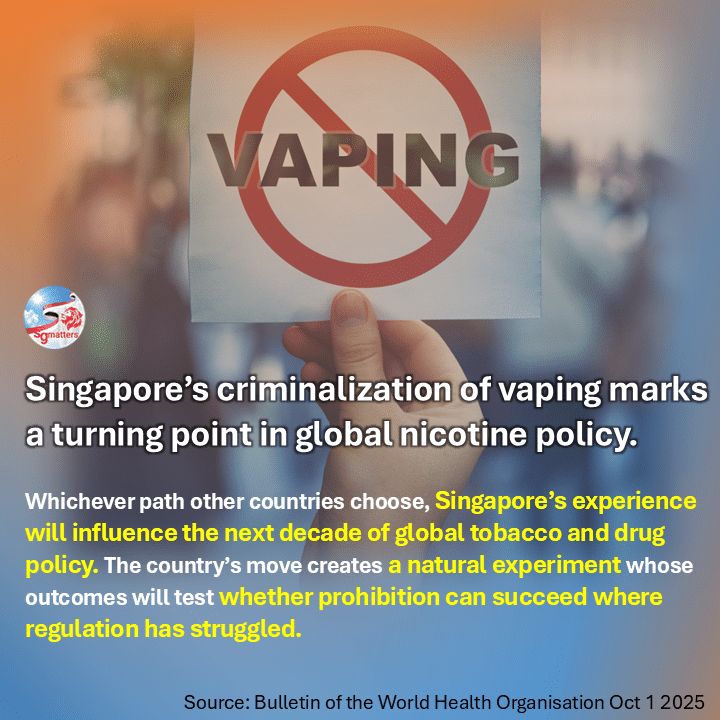
Ultimately, Dr Wu concludes, Singapore’s criminalisation of vaping marks “a turning point in global nicotine policy.” The move reframes a critical debate: whether societies should tolerate some adult benefits of harm reduction at the risk of youth addiction, or draw a firm line against what many see as a new epidemic.
Whichever path other countries take, Singapore’s experience is likely to shape global tobacco and drug policy in the coming decade. As Dr Wu puts it, “The responsibility now lies with researchers, policymakers, and citizens worldwide to document, analyse, and debate its effects, ensuring that future decisions are guided by both principle and evidence.”