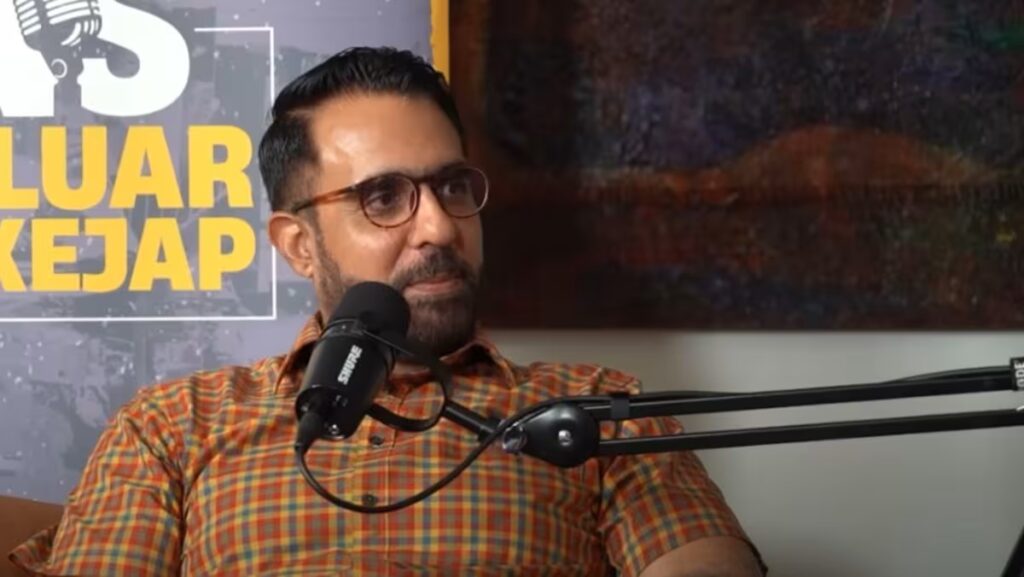
The recent appearance of Mr Pritam Singh, Leader of the Opposition, on the Keluar Sekejap podcast has raised more than a few eyebrows.
While politicians routinely engage media platforms to share their views, what makes this case unusual and troubling is the context, the platform, and the implications for Singapore’s political sovereignty.
Let’s start with the facts.
Mr Singh invited himself to the Keluar Sekejap podcast, a Malaysian political platform hosted by former ministers Khairy Jamaluddin and Shahril Hamdan.
This in itself is telling, considering that he has previously declined invitations to local podcasts aimed at engaging Singaporean audiences. Why, then, was it strategically or politically more important for Mr Singh to speak to a foreign, specifically Malaysian audience?
This is not a question of whether everything he said was right or wrong. In fact, many of his points could be debated on their own merits.
The issue here is it’s context.
A History of Restraint and Mutual Respect
Singapore and Malaysia share a long, intertwined history, one that includes difficult and painful chapters. Following the racial riots of the 1960s, both countries came to a mutual understanding not to interfere in each other’s domestic affairs.
This understanding was not simply diplomatic courtesy. It was a recognition that both societies needed space to develop political stability in their own ways, without stirring sentiments across the Causeway.
This restraint extended even to media.
Singapore banned the circulation of Malaysian newspapers like Utusan Malaysia, while Malaysia did the same for publications like The Straits Times.
The message was clear: our politics, our business.
Mr Singh’s decision to appear on a Malaysian podcast to speak extensively about Singapore’s domestic politics disrupts this carefully maintained balance.
When a senior Singaporean political figure goes on a Malaysian political show to discuss local political strategy, the legitimate question arises:
is this an invitation for Malaysian commentary and potentially interference in our politics?
A Worrying Pattern
This concern cannot be viewed in isolation. During the last general election, politicians from Parti Islam Se-Malaysia (PAS), a party known for its hardline ethno-religious stance openly endorsed Workers’ Party candidates on social media. Their messages were laced with racial and religious overtones, clearly designed to sway segments of the Singaporean electorate along lines we have consistently and deliberately resisted drawing in our politics.
At the time, Mr Singh was conspicuously silent. He did not reject the endorsement, nor did he disassociate the Workers’ Party from the racialised messaging.
His response only came after the Singapore Government publicly flagged the issue of foreign political interference.
Even then, his response left several questions unanswered.
What message does that send? That foreign actors can weigh in, so long as it is politically convenient?
Why Not Speak To Singaporeans?
Singapore is a mature and discerning society. If Mr Singh had views to share about political renewal, the future of opposition politics, or his party’s direction, there were plenty of ways to do so on local platforms, with local journalists and local audiences. But he chose otherwise.
That choice — to sidestep the Singaporean media and speak directly to a Malaysian political audience — should not be taken lightly.
Politicians are rightly judged not just by what they say, but where and to whom they say it.
It is not unreasonable for Singaporeans to ask:
Why was a Malaysian audience prioritised over a Singaporean one?
Is this part of a larger strategy to build political legitimacy beyond our shores?
And most importantly: is this a door we want to open?
Political Boundaries Matter
Political boundaries exist for a reason. Cross-border goodwill is important, but so is the principle of non-interference, especially in matters as foundational as elections, identity, and national direction.
Once we allow foreign political actors to shape or even subtly influence domestic narratives, we risk undermining the trust Singaporeans have in the independence and integrity of our political system.
Mr Singh may not have broken any law. But in politics, not everything that is legal is necessarily wise.
In a world increasingly vulnerable to foreign influence and identity-based division, Singapore must remain vigilant. Our leaders , whether in government or opposition, must lead by example, not by ambiguity.
Mr Singh still owes Singaporeans clear answers. Until then, his decision to invite himself onto a Malaysian platform, while turning down domestic ones, will continue to cast a long and troubling shadow.