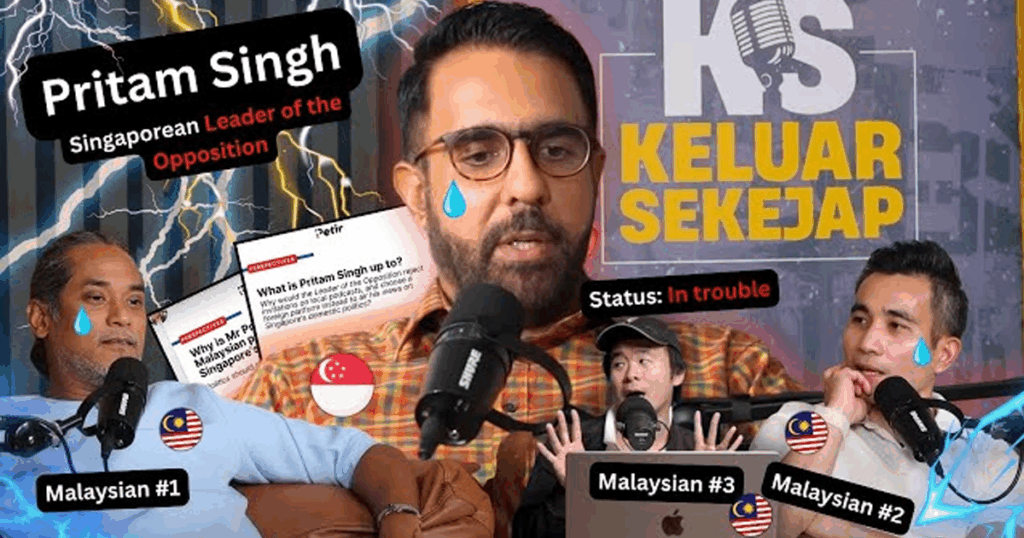
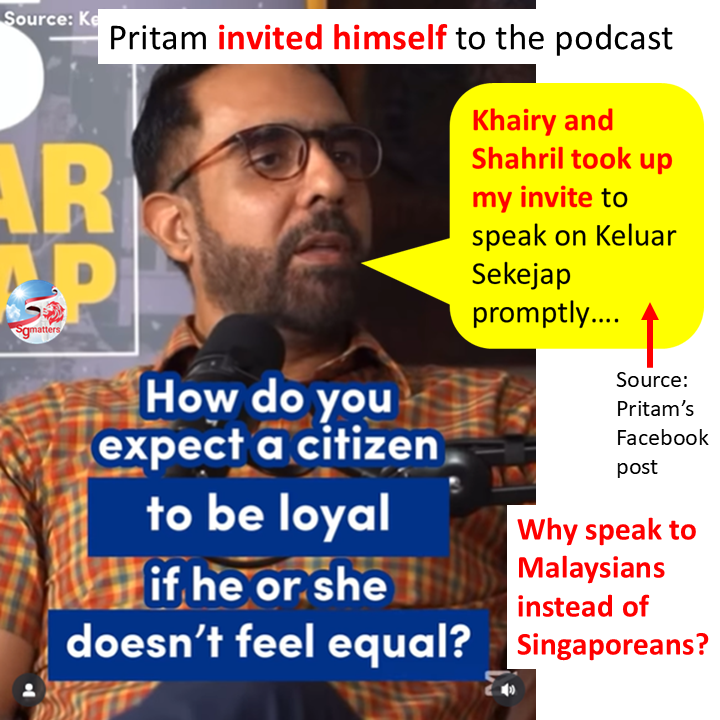
The first thing to note about the podcast with Khairy Jamaluddin and Shahril Hamdan is that Pritam Singh invited himself to do this podcast.
This is unusual when he has reportedly turned down local podcast appearances.
Why bypass local platforms for a Malaysian one?
The optics suggest a deliberate choice to engage a foreign political audience.
Not everything said in the podcast was wrong but that’s beside the point. So let’s not be distracted from the real concern about this podcast.
Some historical context is necessary to understand this concern.
Deliberate mutual restraint between Singapore and Malaysia
Post 1960s, there is an unwritten but long-standing understanding between Singapore and Malaysia not to interfere or comment on each other’s domestic politics.
This is why you don’t hear the PAP commenting on Malaysia politics in any interviews.
This understanding came from hard-learned lessons from the 1964 and 1969 racial riots, the acrimony around Singapore’s separation, and a clear desire on both sides to preserve stability through mutual restraint.
That principle even extended to media restrictions.
Both sides agreed not to circulate their national newspapers across borders.
For Pritam Singh to invite himself and voluntarily speak on a Malaysian platform to a Malaysian audience about Singapore’s political strategy is eroding this principle of restraint.
Pritam Singh is tacitly encouraging Malaysians to talk about, judge, or even influence Singapore politics.
This concern is not unwarranted.
This concern is especially serious when seen against what happened during GE2025.
GE2025 and potential foreign interference
During that election, Malaysia PAS leaders expressed support for WP candidates through their racial and religious endorsements.
Their endorsements ran directly counter to Singapore’s longstanding commitment to secularism and multiracial harmony.
It must be noted that Pritam Singh was silent on these endorsements and spoke only after the Government publicly flagged the issue.
That silence raises trust issues.
Foreign interference isn’t always loud. Sometimes it’s just a wink and a nod.
So Singaporeans should be careful not to take this move by Pritam Singh to do a podcast for a foreign audience lightly.
The perception that a political leader is open to foreign commentary, especially from a neighbour with its own ethno-religious political dynamics, can be destabilising.
Why speak to Malaysians instead of Singaporeans?
If the intent was to talk about party positioning, national challenges, or political values, why not do so on platforms that are homegrown and reach Singaporeans directly?
The fact that Pritam Singh chose a foreign political podcast, hosted by prominent Malaysian ex-ministers with their own domestic agendas, was not a neutral move.
It may not violate any law, but it breaches a longstanding norm that has served Singapore well.
In a time of rising disinformation and foreign interference campaigns, Singaporeans should rightly ask:
Is our political discourse being kept within national boundaries, or are foreign actors being tacitly invited in, either for ideological alignment, strategic endorsement, or political gain?