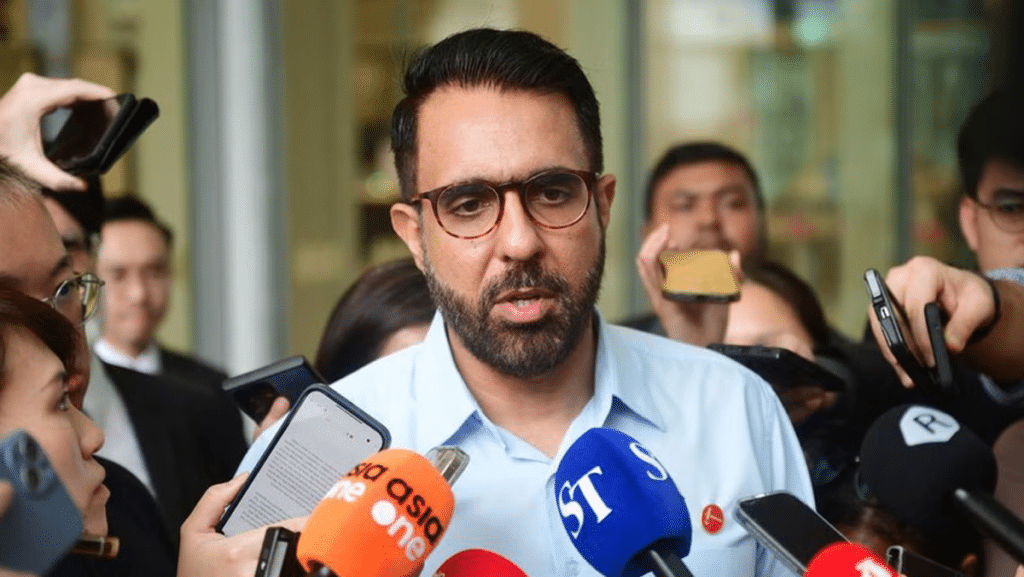
The conviction of Workers’ Party (WP) leader Pritam Singh for lying under oath has exposed a concerning reality about both the party and its supporters.
This episode, which culminated in his sentencing on 17 February 2025, has not only cast doubt on WP’s commitment to integrity but also revealed a troubling fanaticism among its base. What should have been a moment of introspection for the party and its supporters has instead showcased a disregard for accountability and moral standards.
The issue at hand is not about Pritam Singh’s ability to contest in the upcoming General Election following his conviction for lying under oath. Rather, it is the attitude and response from WP and its supporters that is deeply troubling.
Instead of demonstrating accountability and introspection, the WP has chosen to rally around its leader, presenting a “united front” as if nothing significant has occurred. This reaction undermines the party’s supposed commitment to integrity and accountability, values it has long claimed to uphold.
Actions speak louder than words, and WP’s failure to act decisively against its leader signals a worrying erosion of its moral compass.
The party’s inaction suggests that its proclaimed values are little more than rhetoric and it is a troubling development for Singapore’s largest opposition party.
Equally troubling is the response from WP supporters.
Before the court ruling, many argued that Pritam was innocent until proven guilty, citing perceived bias in the Committee of Privileges’ findings.
However, following his conviction by an impartial court on 17 February, these same supporters have shifted to outright denial or minimization of his wrongdoing. This behavior mirrors a “sugar rush” where an irrational high is driven by blind loyalty rather than reasoned judgement.
Such blind allegiance is akin to celebrity worship, where fans defend their idols regardless of their actions.
In this case, WP supporters appear willing to overlook integrity and accountability in their pursuit of political change. Their actions suggest that some supporters are more focused on opposing the ruling People’s Action Party (PAP) than ensuring Singapore is led by individuals of high moral standing.
This blind support is alarming because it reflects a deeper issue. It is the willingness to sacrifice principles for political expediency. The reaction from WP supporters demonstrates that their loyalty is not grounded in a desire for better governance or higher standards but in an almost illogical devotion to their party.
This fanaticism risks eroding the very foundation of Singapore’s democracy, a system built on trust, transparency, and respect for the rule of law.
WP’s failure to hold its leader accountable raises questions about its suitability as a potential governing party.
As Singapore’s largest opposition party, WP plays a critical role in shaping political discourse and offering an alternative vision for governance. However, if it cannot uphold basic principles like honesty and integrity within its own ranks, how can it be trusted to lead the nation?
Despite this disappointment, I remain hopeful that WP supporters will reflect on this episode and reconsider their stance.
When the “sugar rush” fades and emotions subside, one can only hope they will recognize that blind loyalty to a party lacking moral accountability does not serve Singapore’s best interests. True progress requires leaders who embody integrity and supporters who demand it.
https://www.facebook.com/permalink.php?story_fbid=pfbid037LZt6MUD3LQnPpm6cUzKm6qv1owkUDL4HmuKekgdAmcG7idaLcrtzb6bWDFbgfuul&id=100090147336873