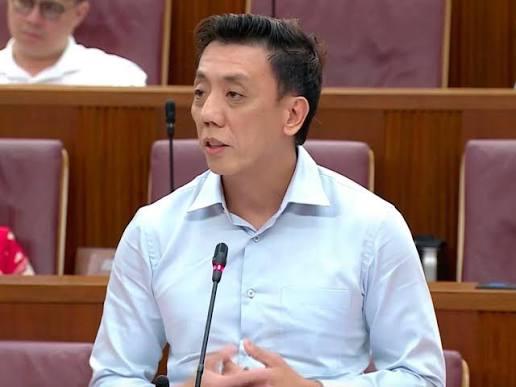

In a recent Facebook post, Associate Professor Jamus Lim expressed scepticism about the role of artificial intelligence (AI) in education while reiterating that Singapore should aim for smaller class sizes. His concerns may be well-intentioned but his position overlooks important policy realities, research evidence, and the transformative potential of technology in classrooms.
Smaller Class Size = Quality?
While intuitively appealing, the link between smaller class sizes and better learning outcomes is not as robust or universal as many believe.
Large-scale studies, including the famous Tennessee STAR experiment in the US and research summaries by the UK’s Education Endowment Foundation, and even some parts of Asia, has shown diminishing returns to class-size reductions, especially once class sizes fall below 30.
What matters more is the quality of teaching, not the quantity of students in a room.
This is a consistent finding across systems, including top-performing ones like Japan and South Korea which operate with relatively large class sizes, yet outperform others with smaller classes because of high teacher professionalism and structured pedagogy.
Not A One-Size-Fits-All Approach
MOE does not use a one-size-fits-all approach to mandate that all schools must have the same class size.
Instead, more teaching resources are deployed to students with greater needs. Schools have the flexibility to organise smaller class sizes where it matters – at the margins, particularly in early childhood or in classes with complex learning needs.
So, while small classes can help, particularly for students with special needs or in early education, they are not a silver bullet—and reducing class size across the board may be an inefficient use of limited resources.

AI as an Educational Tool Is Not “Fool’s Gold’
Jamus described the promise of AI in classrooms as “fool’s gold,” implying that it is illusory or empty.
But that is being prematurely dismissive.
While he is right to note that human traits like care and patience matter, especially for young children, what he fails to grasp is that AI is not meant to replace teachers. It is meant to augment them.
Used properly, it can analyze learning data to spot gaps, and allow for differentiated instruction to deliver content at a pace tailored to each learner’s needs.
It can automate tedious administrative work and free up teacher time for one-on-one coaching, emotional support and creating project guidance, the very thing Jamus said is missing.
It is not either AI or human guidance. It is both.
In fact, Singapore’s tech-savvy population and high baseline of teacher quality position us well to lead in thoughtful integration of AI into education, rather than dismissing it.
AI Doesn’t Just Support Learning. AI Is Learning.
At the basic level, students learn how AI works. They learn to be comfortable with the use of AI and they learn to appreciate AI’s strengths and limitations, which is critical for digital discernment. All these build AI literacy which will stand them in good stead for the work of the future.
Idealism Needs To Be Balance With Realism
Jamus drew on Confucius and Laozi to advocate for “leading from behind,” and criticizes what he calls “shoveling” knowledge.
But modern education requires a diverse mix of pedagogical approaches because good teaching is diverse.
Today’s educators must be skilled in a range of methods which include direct instruction (yes, shoveling of knowledge is sometimes necessary and efficient), inquiry-based learning, blended learning and technology-enabled support.
Idealism Needs to Be Balanced by Realism. To romanticize one approach while dismissing others is to overlook the real complexity of teaching.
Conclusion: A Complex System Deserves A Nuanced Response
A deep care for education is what all of us share. But to reduce the quality of education to class size and to dismiss the use of AI as “fool’s gold” is to oversimplify the complex process of education.
What Jamus did was to:
- overestimate the benefits of class-size reduction relative to teacher quality
- underestimate the potential of AI as an assistive, not replacement, tool
- over-romanticizing one model of teaching while ignoring the diversity of modern pedagogy
The success of Singapore’s education does not come from dogma. It comes from a careful balancing act: ensuring access, maintaining quality, embracing innovation, and preserving equity.
What we need is not small classes across the board regardless of needs, but to scale smart and with the right tools, the right people, and a firm grasp of reality, we can deliver the best education to our students.