On 12 September 1965, shortly after independence, the fledgling nation’s prime minister Lee Kuan Yew stood before a crowd of supporters and declared, “We made this country. From nothing! From mudflats! Ten years from now, this will be a metropolis. Never fear!”
The momentum of nation-building began. Almost without anyone noticing it, Mr Lee had achieved a metropolis in a very short time. New buildings sprung up everywhere.
Then came the stock-taking in 1995.
“We made our share of mistakes in Singapore. For example, in our rush to rebuild Singapore, we knock down many old and quaint Singapore buildings. Then we realized we are destroying a valuable part of our cultural heritage. .. We halted the demolition. Instead we undertook extensive conservation and restoration. The value of these areas in architectural, cultural and tourism terms cannot be quantified only in dollars and cents.” – The Wit and Wisdom of Lee Kuan Yew.
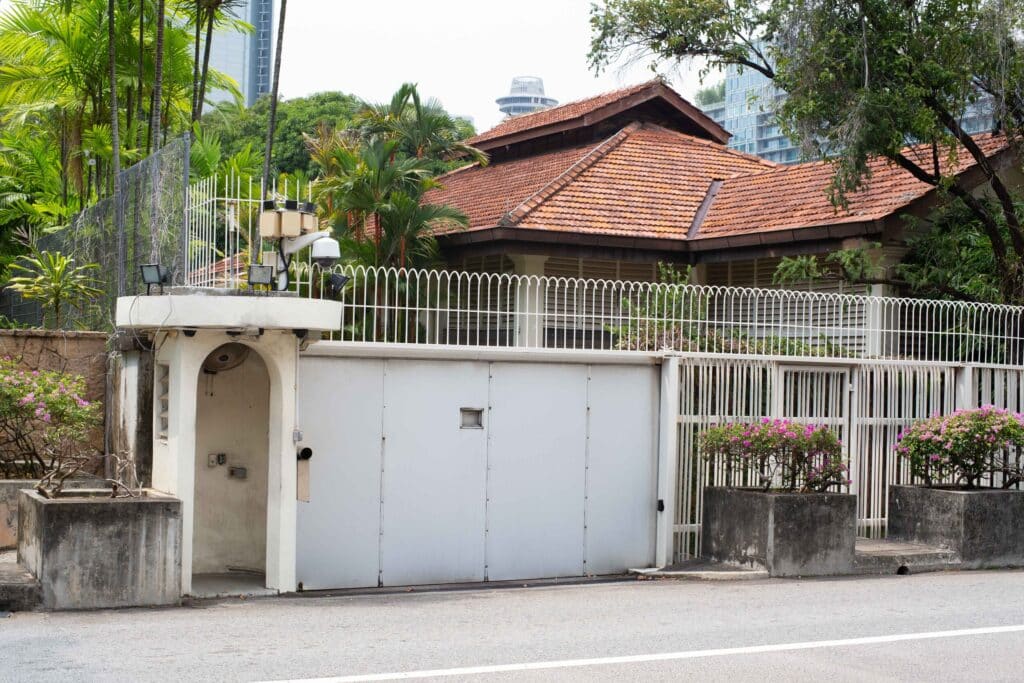
In a Cabinet meeting in July 2011, Mr Lee Kuan Yew met Cabinet members to state his preference for the house to be demolished after he died. He then listened to the views of the Cabinet.
Apart from then PM Lee Hsien Loong who did not speak, Mr Lee listened to the rest of the Cabinet members who were unanimous in persuading him that the house should not be demolished.
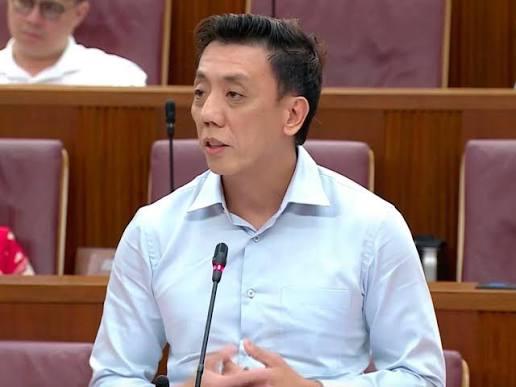
“All of us who spoke felt deeply that, as a young nation, we needed a deeper sense of history, and that the house was of historical significance,” said Mr Heng Swee Keat in 2017.
Mr Lee Kuan Yew looked “very thoughtful” after the session, Mr Heng said.
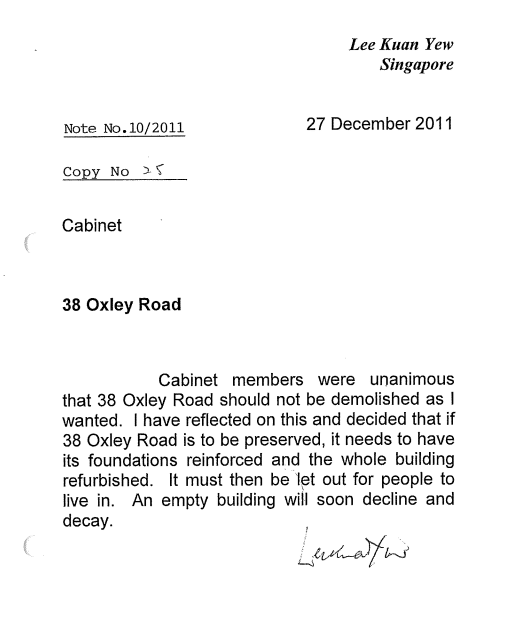
The passage of time (5 months) between meeting with Cabinet and then writing a note to Cabinet showed that Mr lee had mulled over what Cabinet members had said to him.
Mr Lee Kuan Yew felt it was proper and important to inform the Government “that he was prepared to consider the possibility that the Government of the day might decide not to demolish the house”. Hence, his emphasis that the house needed to have its foundations reinforced, the whole building refurbished and then let out for people to live in.
By that time, Mr Lee had already decided (August 2011) to will 38 Oxley Road to elder son Lee Hsien Loong.
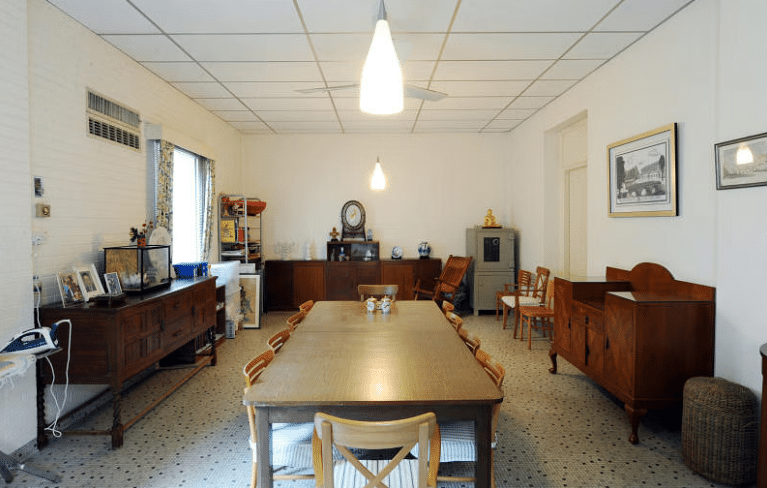
Mr Lee also accepted a proposal to demolish the private living spaces to preserve the privacy of the family; keep the basement dining room, which was of historical significance; strengthen the structure which was decaying, and create a new and separate living area, so that the house could be lived in.
This proposal aligns with the content of his note to Cabinet on 27 December 2011.
In December 2011, Mr Lee had told his family that it was “best to redevelop 38 Oxley Road straightaway”, after he died, and do what was proposed.
If there is any unfinished work by Mr Lee Kuan Yew that he wanted done, it is this proposal to renovate the house, strengthen its structure and preserve the basement dining room for its historical significance, work that was to be done after his death.
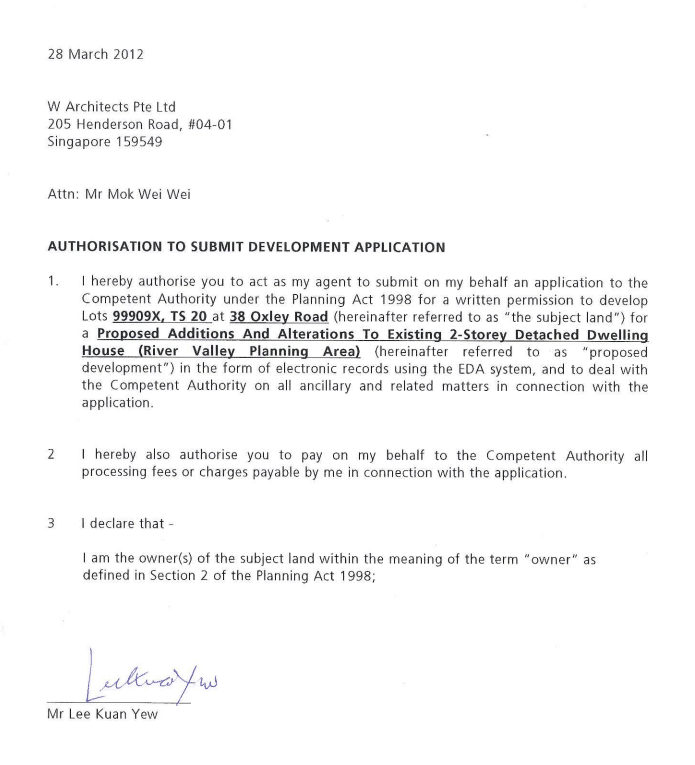
Remember, he met the architect, finalised plans, sought approval, obtained it, and wanted these plans carried out immediately after his death.
You cry when Bukit Brown Cemetery had to give way to development.
Don’t make the mistake of demolishing something that you can never replaced.
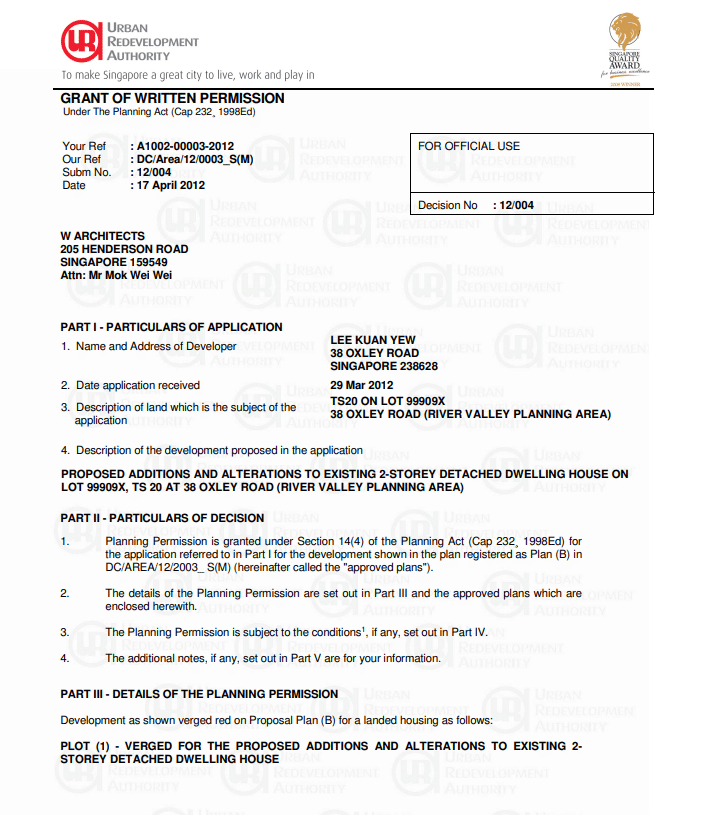
In the renovation plans he submitted to URA, Mr Lee clearly had conservation requirements in mind, as he planned for a house that was completely refurbished except for its external structure and the basement dining room.
Mr Lee had obtained URA’s approval for these plans. The right thing to do is to execute on his behalf what he expected done after his death.